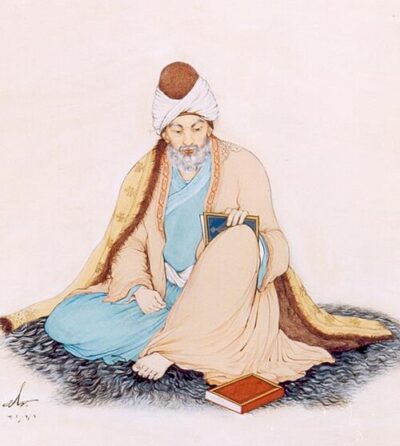
Masnavi
Masnavi is a poetic work by Rumi.
- Written by
- Rumi
- Genre
- Sufi literature
- Country of origin
- Sultanate of Rum
All 7 facts, and where they come from
Facts
7 facts · 0 confirmed by two sources · 0 cited · 7 from one source
Where this comes from
Papalocal keeps its own record. It started from these sources; what each one said is kept here as it was copied, so a change on their side never changes this page by itself. Tap one to read its version.
What Wikidata says · copied November 17, 2026 · revision 2569659117
- Described as
- poetic work by Rumi
- Other names
- Masnavi-I Ma'navi, Mesnevi, Mathnawi, Ma'navi, Mathnavi, Masnavi Manavi, Masnavi Maanavi
- What it is
- literary work
- Written by
- Rumi
- Genre
- Sufi literature; masnavi; traditional story
- Language
- Persian
- Country of origin
- Sultanate of Rum
- Wikipedias with a page
- 39
Wikidata item Q6579646 (wikidata.org/wiki/Q6579646), public domain (CC0). Copied 2026-11-17.
What Wikipedia says · copied November 17, 2026 · revision 1383284993
The Masnavi is an extensive Persian masnavi (a poetic form) written by Rumi, and one of the most influential works in the history of Sufism. It is a series of six books of poetry that together amount to around 25,000 verses or 50,000 lines.
Sometimes described as being like a "Quran in Persian", some Muslims regard the Masnavi as one of the most important works of Islamic literature, falling behind only the Quran. It has been viewed by many commentators as the greatest mystical poem in world literature.
It is a spiritual text that teaches Sufis how to reach their goal of being truly in love with God.
From the Wikipedia article “Masnavi” (en.wikipedia.org/wiki/Masnavi), by its contributors, under CC BY-SA 4.0 (creativecommons.org/licenses/by-sa/4.0/). Copied 2026-11-17; not changed.
Confirmed Two sources agree. Cited One source, and it names where it got it. One source One source, without a reference of its own. Sources disagree The sources disagree. We show the best-supported value and keep theirs below.
Picture: Wikimedia Commons: Khalili Collection Islamic Art mss-0945-2b-3a.jpg · See Commons file page