Maxwell–Boltzmann statistics
Maxwell–Boltzmann statistics is a statistical distribution used in many-particle mechanics.
All 4 facts, and where they come from
Facts
4 facts · 0 confirmed by two sources · 0 cited · 4 from one source
Where this comes from
Papalocal keeps its own record. It started from these sources; what each one said is kept here as it was copied, so a change on their side never changes this page by itself. Tap one to read its version.
What Wikidata says · copied November 17, 2026 · revision 2567933735
- Described as
- statistical distribution used in many-particle mechanics
- What it is
- particle statistics; scientific theory
- Named after
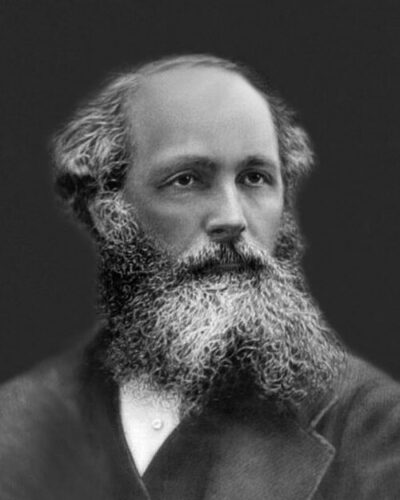
- James Clerk Maxwell; Ludwig Boltzmann
- Wikipedias with a page
- 23
Wikidata item Q1206235 (wikidata.org/wiki/Q1206235), public domain (CC0). Copied 2026-11-17.
What Wikipedia says · copied November 17, 2026 · revision 1357908662
In statistical mechanics, Maxwell–Boltzmann statistics describes the distribution of classical material particles over various energy states in thermal equilibrium. It is applicable when the temperature is high enough or the particle density is low enough to render quantum effects negligible.
The expected number of particles with energy εi for Maxwell–Boltzmann statistics is
⟨Ni⟩=gie(εi−μ)/kBT=NZgie−εi/kBT,
where:εi is the energy of the ith energy level,
⟨Ni⟩ is the average number of particles in the set of states with energy εi,
gi is the degeneracy of energy level i, that is, the number of states with energy εi which may nevertheless be distinguished from each other by some other means,
μ is the chemical potential,
kB is the Boltzmann constant,
T is absolute temperature,
N is the total number of particles: N=∑iNi,
Z is the partition function: Z=∑igie−εi/kBT,
e is Euler's number
Equivalently, the number of particles is sometimes expressed as
⟨Ni⟩=1e(εi−μ)/kBT=NZe−εi/kBT,
where the index i now specifies a particular state rather than the set of all states with energy εi, and Z=∑ie−εi/kBT.
From the Wikipedia article “Maxwell–Boltzmann statistics” (en.wikipedia.org/wiki/Maxwell–Boltzmann_statistics), by its contributors, under CC BY-SA 4.0 (creativecommons.org/licenses/by-sa/4.0/). Copied 2026-11-17; not changed.
Confirmed Two sources agree. Cited One source, and it names where it got it. One source One source, without a reference of its own. Sources disagree The sources disagree. We show the best-supported value and keep theirs below.