Maxwell's demon
Maxwell's demon is a thought experiment.
All 3 facts, and where they come from
Facts
3 facts · 0 confirmed by two sources · 0 cited · 3 from one source
Where this comes from
Papalocal keeps its own record. It started from these sources; what each one said is kept here as it was copied, so a change on their side never changes this page by itself. Tap one to read its version.
What Wikidata says · copied November 17, 2026 · revision 2533588294
- Described as
- thought experiment
- What it is
- thought experiment
- Named after
- James Clerk Maxwell; demon
- Wikipedias with a page
- 44
Wikidata item Q212397 (wikidata.org/wiki/Q212397), public domain (CC0). Copied 2026-11-17.
What Wikipedia says · copied November 17, 2026 · revision 1385826640
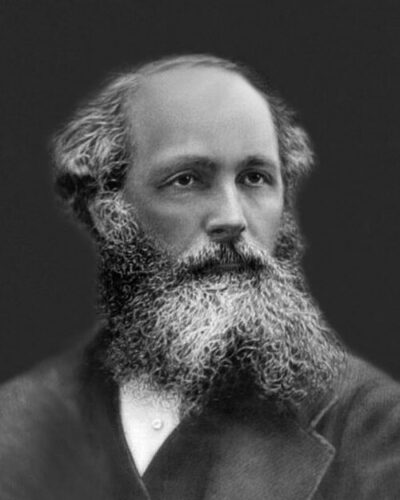
Maxwell's demon is a thought experiment that appears to disprove the second law of thermodynamics. It was proposed by the physicist James Clerk Maxwell in 1867. In his first letter, Maxwell referred to the entity as a "finite being" or a "being who can play a game of skill with the molecules". Lord Kelvin would later call it a "demon".
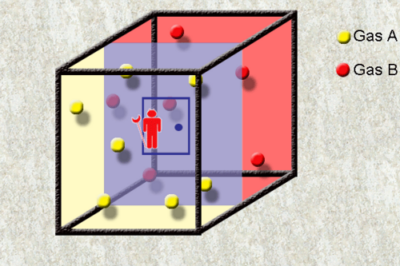
In the thought experiment, a demon controls a door between two chambers containing gas. As individual gas molecules (or atoms) approach the door, the demon quickly opens and closes the door to allow only fast-moving molecules to pass through in one direction, and only slow-moving molecules to pass through in the other. Because the kinetic temperature of a gas depends on the velocities of its constituent molecules, the demon's actions cause one chamber to warm up and the other to cool down. This would decrease the total entropy of the system, seemingly without applying any work, thereby violating the second law of thermodynamics.
The concept of Maxwell's demon has provoked substantial debate in the philosophy of science and theoretical physics, which continues to the present day. It stimulated work on the relationship between thermodynamics and information theory. Most scientists argue that, on theoretical grounds, no device can violate the second law in this way. Other researchers have implemented forms of Maxwell's demon in experiments, though they all differ from the thought experiment to some extent and none have been shown to violate the second law.
From the Wikipedia article “Maxwell's demon” (en.wikipedia.org/wiki/Maxwell's_demon), by its contributors, under CC BY-SA 4.0 (creativecommons.org/licenses/by-sa/4.0/). Copied 2026-11-17; not changed.
Confirmed Two sources agree. Cited One source, and it names where it got it. One source One source, without a reference of its own. Sources disagree The sources disagree. We show the best-supported value and keep theirs below.
Picture: Dr Juzam, via Wikimedia Commons · Public domain