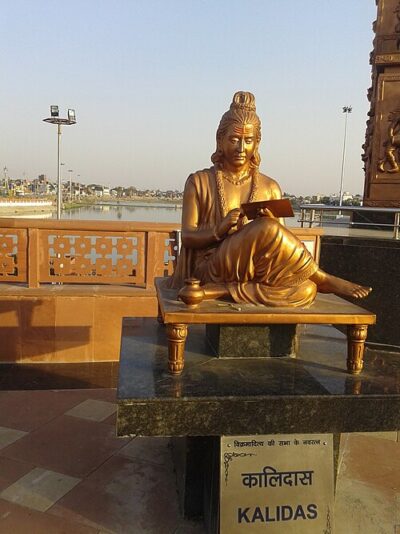
Meghadūta
Meghadūta is a lyric poem by Kālidāsa.
- Written by
- Kalidasa
- Genre
- lyric poetry
All 5 facts, and where they come from
Facts
5 facts · 0 confirmed by two sources · 0 cited · 5 from one source
Where this comes from
Papalocal keeps its own record. It started from these sources; what each one said is kept here as it was copied, so a change on their side never changes this page by itself. Tap one to read its version.
What Wikidata says · copied November 17, 2026 · revision 2483932001
- Described as
- lyric poem by Kālidāsa
- Other names
- Meghaduta
- What it is
- literary work
- Written by
- Kalidasa
- Genre
- lyric poetry; Sandesa Kavya
- Language
- Sanskrit
- Wikipedias with a page
- 26
Wikidata item Q182283 (wikidata.org/wiki/Q182283), public domain (CC0). Copied 2026-11-17.
What Wikipedia says · copied November 17, 2026 · revision 1382587268
Meghadūta (Bengali: মেঘদূত, Telugu: మేఘదూత, Sanskrit: मेघदूतम्, literally Cloud Messenger) is a lyric poem written by Kālidāsa (c. 4th–5th century CE), considered to be one of the greatest classical Sanskrit poets. It describes how a yakṣa (or nature spirit), who had been banished by his master to a remote region for a year, asked a cloud to take a message of love to his wife. The poem became well-known in Bengali literature and inspired other poets to write similar poems (known as "messenger-poems", or Sandesha Kavya) on similar themes. A Telugu poet, Korada Ramachandra Sastri wrote Ghanavrttam in Sanskrit, a sequel to Meghaduta.
From the Wikipedia article “Meghadūta” (en.wikipedia.org/wiki/Meghadūta), by its contributors, under CC BY-SA 4.0 (creativecommons.org/licenses/by-sa/4.0/). Copied 2026-11-17; not changed.
Confirmed Two sources agree. Cited One source, and it names where it got it. One source One source, without a reference of its own. Sources disagree The sources disagree. We show the best-supported value and keep theirs below.