
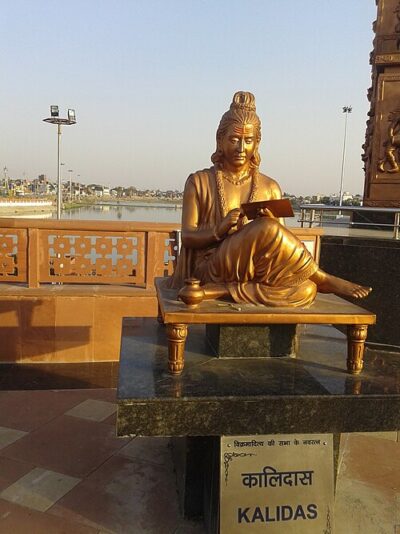
Kalidasa
Kalidasa was A classical Sanskrit writer widely regarded as the greatest poet and dramatist of ancient India.. Known for Raghuvaṃśa, Abhigyanashakuntalam and Mālavikāgnimitram.
Facts
17 facts · 0 confirmed by two sources · 4 cited · 13 from one source
Where this comes from
Papalocal keeps its own record. It started from these sources; what each one said is kept here as it was copied, so a change on their side never changes this page by itself. Tap one to read its version.
What Wikidata says · copied November 16, 2026 · revision 2564397671
- Described as
- A classical Sanskrit writer widely regarded as the greatest poet and dramatist of ancient India.
- Other names
- Hindu Mythology, Love, Nature, पौराणिक कथा, प्रेम, प्रकृति, कालिदास
- Occupation
- poet · 2 references; lyricist; playwright · 1 reference; writer · 2 references; film screenwriter · 1 reference
- Genre
- epic poem; lyric poetry; drama fiction; Indian classical drama
- Known for
- Raghuvaṃśa; Abhigyanashakuntalam; Mālavikāgnimitram; Vikramōrvaśīyam; Kumārasaṃbhava; Meghadūta; Ṛtusaṃhāra
- Religion
- Hinduism
- Wikipedias with a page
- 176
Wikidata item Q7011 (wikidata.org/wiki/Q7011), public domain (CC0). Copied November 16, 2026.
What Wikipedia says · copied November 16, 2026 · revision 1384274027
Kālidāsa (Sanskrit: कालिदास, "Servant of Kali"; 4th–5th century CE) was a Classical Sanskrit author who is often considered ancient India's greatest poet and playwright. His plays and poetry are primarily based on Hindu Puranas and philosophy. His surviving works consist of three plays, two epic poems and two shorter poems.
From the Wikipedia article “Kalidasa” (en.wikipedia.org/wiki/Kalidasa), by its contributors, under CC BY-SA 4.0 (creativecommons.org/licenses/by-sa/4.0/). Copied November 16, 2026; not changed.
Confirmed Two sources agree. Cited One source, and it names where it got it. One source One source, without a reference of its own. Sources disagree The sources disagree. We show the best-supported value and keep theirs below.
