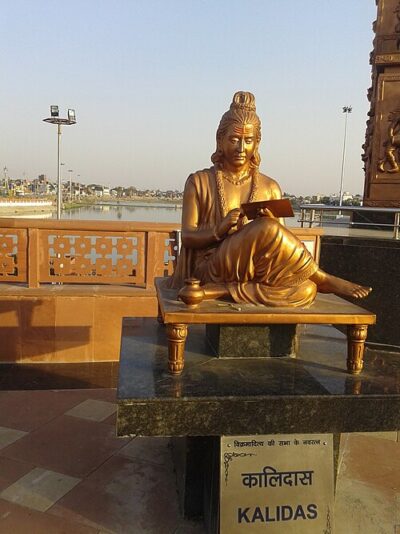
Vikramōrvaśīyam
Vikramōrvaśīyam is a Classical Sanskrit play. It was written by Kalidasa.
- Written by
- Kalidasa
- Genre
- Indian classical drama
All 5 facts, and where they come from
Facts
5 facts · 0 confirmed by two sources · 0 cited · 5 from one source
Where this comes from
Papalocal keeps its own record. It started from these sources; what each one said is kept here as it was copied, so a change on their side never changes this page by itself. Tap one to read its version.
What Wikidata says · copied November 17, 2026 · revision 2515924717
- Described as
- Classical Sanskrit play
- Other names
- Vikramorvasī, Urvasī won by Valour, Vikramōrvaśīya, Vikramorvaśī
- What it is
- literary work
- Written by
- Kalidasa
- Genre
- Indian classical drama; romantic drama
- Language
- Sanskrit
- Wikipedias with a page
- 18
Wikidata item Q2671559 (wikidata.org/wiki/Q2671559), public domain (CC0). Copied 2026-11-17.
What Wikipedia says · copied November 17, 2026 · revision 1371026906
Vikramōrvaśīyam (Sanskrit: विक्रमोर्वशीयम्, lit. 'Ūrvaśī Won by Valour') is a five-act Sanskrit play by ancient Indian poet Kālidāsa, who lived in the 4th or 5th Century CE, on the Vedic love story of King Pururavas and an Apsarā (celestial nymph) named Ūrvaśī, known for her beauty.
As per the tradition, while the basic plot has taken elements from the sources such as the Samvāda Sūkta of the Rig Veda, Mahābhārata and others, Kālidāsa has made significant adaptations to make the presentation more appealing while establishing his prowess as a playwright.
Vikramorvaśīyam is the second of the three plays written by Kālidāsa, the first being Mālavikāgnimitram and the third being the celebrated Abhijñānaśākuntalam.
According to one theory, "Vikrama" in the title alludes to Kālidāsa's patron king Vikramāditya. However, there is no conclusive evidence for this, although both are said to have lived around the same time period. It simply means "Valour".
From the Wikipedia article “Vikramōrvaśīyam” (en.wikipedia.org/wiki/Vikramōrvaśīyam), by its contributors, under CC BY-SA 4.0 (creativecommons.org/licenses/by-sa/4.0/). Copied 2026-11-17; not changed.
Confirmed Two sources agree. Cited One source, and it names where it got it. One source One source, without a reference of its own. Sources disagree The sources disagree. We show the best-supported value and keep theirs below.