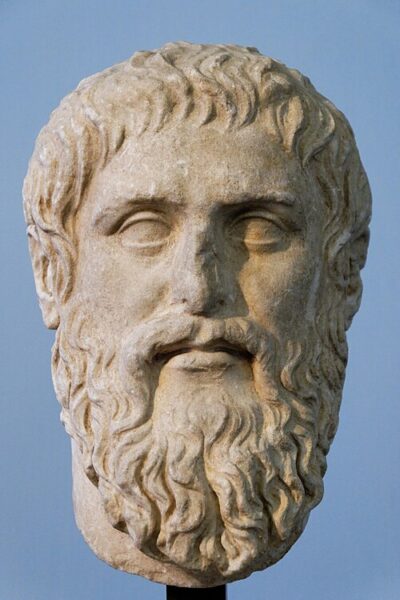
Meno
Meno is a Socratic dialogue by Plato on the topic of learning. It is part of Platonic dialogue.
- Written by
- Plato
- Genre
- dialogue
All 6 facts, and where they come from
Facts
6 facts · 0 confirmed by two sources · 0 cited · 6 from one source
Where this comes from
Papalocal keeps its own record. It started from these sources; what each one said is kept here as it was copied, so a change on their side never changes this page by itself. Tap one to read its version.
What Wikidata says · copied November 17, 2026 · revision 2555874120
- Described as
- Socratic dialogue by Plato on the topic of learning
- Other names
- Plat. Meno
- What it is
- written work; Platonic dialogue
- Written by
- Plato
- Genre
- dialogue
- Language
- Ancient Greek
- Part of the series
- Platonic dialogue · 1 reference
- Wikipedias with a page
- 42
Wikidata item Q746253 (wikidata.org/wiki/Q746253), public domain (CC0). Copied 2026-11-17.
What Wikipedia says · copied November 17, 2026 · revision 1384479821
Meno (; Ancient Greek: Μένων, romanized: Ménōn) is a Socratic dialogue written by Plato around 385 BC, but set at an earlier date around 402 BC. Meno begins the dialogue by asking Socrates whether virtue (in Ancient Greek: ἀρετή, aretē) can be taught, acquired by practice, or comes by nature. In order to determine whether virtue is teachable or not, Socrates tells Meno that they first need to determine what virtue is. When the characters speak of virtue, or aretē, they refer to virtue in general, rather than particular virtues, such as justice or temperance. The first part of the work showcases Socratic dialectical style; Meno, unable to adequately define virtue, is reduced to confusion or aporia. Socrates suggests that they seek an adequate definition for virtue together. In response, Meno suggests that it is impossible to seek what one does not know, because one will be unable to determine whether one has found it.
Socrates challenges Meno's argument, often called "Meno's Paradox", "Learner's Paradox", or the "Arabic Paradox", by introducing the theory of knowledge as recollection (anamnesis). As presented in the dialogue, the theory proposes that souls are immortal and know all things in a disembodied state; learning in the embodied is actually a process of recollecting that which the soul knew before it came into a body. Socrates demonstrates recollection in action by posing a mathematical puzzle to one of Meno's slaves. Subsequently, Socrates and Meno return to the question of whether virtue is teachable, employing the method of hypothesis. Near the end of the dialogue, Meno poses another famous puzzle, called "the Meno problem" or "the Value Problem for Knowledge", which questions why knowledge is valued more highly than true belief. In response, Socrates provides a famous and somewhat enigmatic distinction between knowledge and true belief.
From the Wikipedia article “Meno” (en.wikipedia.org/wiki/Meno), by its contributors, under CC BY-SA 4.0 (creativecommons.org/licenses/by-sa/4.0/). Copied 2026-11-17; not changed.
Confirmed Two sources agree. Cited One source, and it names where it got it. One source One source, without a reference of its own. Sources disagree The sources disagree. We show the best-supported value and keep theirs below.