
Minister of Defense of Russia
Minister of Defense of Russia is a position in Russia. It was created in 1991.
All 6 facts, and where they come from
Facts
6 facts · 0 confirmed by two sources · 0 cited · 6 from one source
Where this comes from
Papalocal keeps its own record. It started from these sources; what each one said is kept here as it was copied, so a change on their side never changes this page by itself. Tap one to read its version.
What Wikidata says · copied November 17, 2026 · revision 2539414670
- Described as
- position in Russia
- Other names
- Minister of Defence of the Russian Federation
- What it is
- position
- Created
- August 20, 1991
- Located in
- Moscow
- Country
- Russia
- Office of
- Russia
- Official website
- https://structure.mil.ru/management/minister.htm · 1 reference
- Wikipedias with a page
- 8
Wikidata item Q17287317 (wikidata.org/wiki/Q17287317), public domain (CC0). Copied 2026-11-17.
What Wikipedia says · copied November 17, 2026 · revision 1373780548
The Minister of Defence of the Russian Federation (Russian: Министр обороны Российской Федерации) is the minister responsible for the Russian Armed Forces.
Marshal of Aviation Yevgeny Shaposhnikov was the last minister of defence of the Soviet Union. General Colonel Konstantin Kobets supported then President of the Russian Soviet Federative Socialist Republic Boris Yeltsin during the August coup of 1991. From 19 August until 9 September 1991, Konstantin Kobets was defence minister of the RSFSR, though there was no ministry. This post was then abolished.
The first minister of defence of the Russian Federation was Boris Yeltsin, who appointed himself to the position by a decree of mid March 1992.
In May 1992, President of Russia Boris Yeltsin appointed General of the Army Pavel Grachev to the post of minister of defence. Grachev's decision to side with Yeltsin in the Russian constitutional crisis of 1993, when the president called up tanks to shell the Russian White House to blast his opponents out of parliament, effectively deprived the Supreme Soviet of Russia of its nominal an opportunity to overturn the president's authority. At least partly for that reason, Yeltsin retained his defence minister despite intense criticism of Grachev's management of the First Chechen War and the Russian military establishment in general. Finally, Yeltsin's victory in the first round of the 1996 Russian presidential election spurred Yeltsin to dismiss Grachev.
In March 2001, Sergei Ivanov, previously secretary of the Security Council of Russia, was appointed defence minister by President Vladimir Putin, becoming Russia's first non-uniformed civilian defence minister.
Putin called the personnel changes in Russia's security structures coinciding with Ivanov's appointment as defence minister "a step toward demilitarizing public life." Putin also stressed Ivanov's responsibility for overseeing military reform as defence minister. What Putin did not emphasise was Ivanov's long service within the KGB and FSB and his then rank of General-Lieutenant within the FSB. Such military and security agency associated men are known as siloviki.
As of 2002 there were four living Marshals of the Soviet Union. Such men were automatically advisors to the defence minister. The Marshals alive at that time were Viktor Kulikov, Vasily Petrov, Sergei Sokolov, a former minister of defence of the Soviet Union, and Dmitri Yazov. Yazov was listed by the American analysts Scott and Scott in 2002 as a consultant to the (former 10th) Directorate for International Military Cooperation. The last of the four, Yazov, died in February 2020.
Perhaps the first 'real' non-uniformed defence minister was Anatoliy Serdyukov, appointed in February 2007. Serdyukov was a former Tax Minister with little siloviki or military associations beyond his two years' military service.
From the Wikipedia article “Minister of Defence (Russia)” (en.wikipedia.org/wiki/Minister_of_Defence_(Russia)), by its contributors, under CC BY-SA 4.0 (creativecommons.org/licenses/by-sa/4.0/). Copied 2026-11-17; not changed.
Confirmed Two sources agree. Cited One source, and it names where it got it. One source One source, without a reference of its own. Sources disagree The sources disagree. We show the best-supported value and keep theirs below.
People connected 10
Held this office
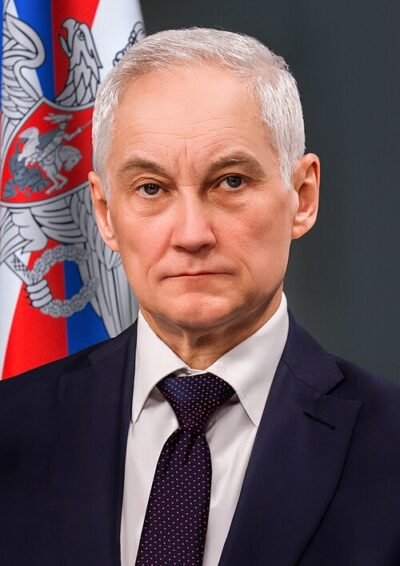 Andrei Belousov (2024–)Minister of Defense of the Russian Federation
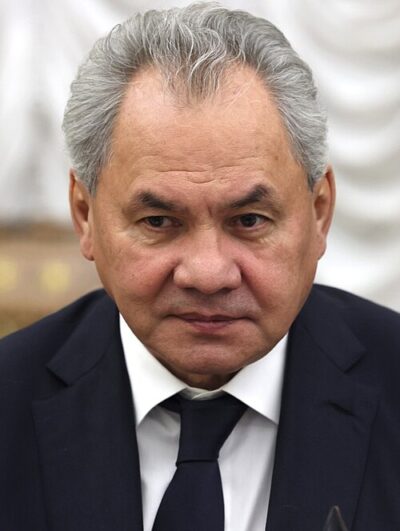 Sergei Shoigu (2012–2024)Secretary of the Security Council of the Russian Federation since 2024 and former Russian defense minister
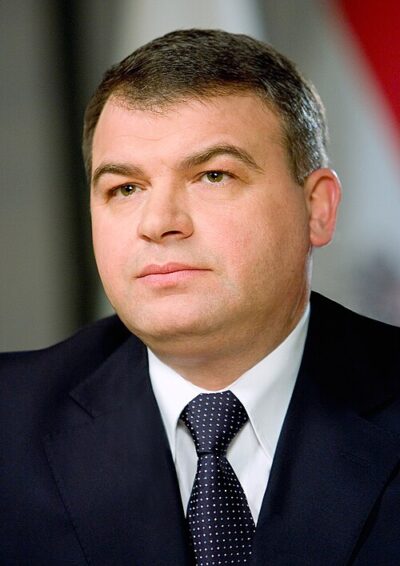 Anatoly Serdyukov (2007–2012)Russian politician
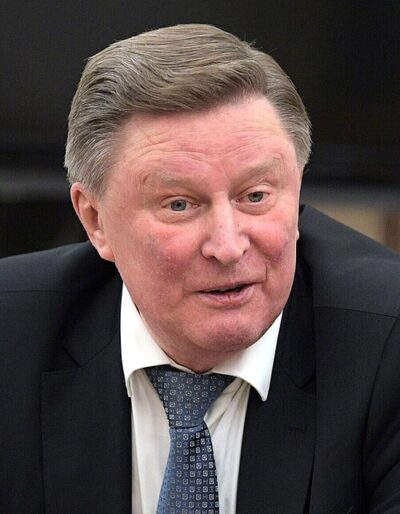 Sergei Ivanov (2001–2007)Russian senior official and politician (1953–2026)
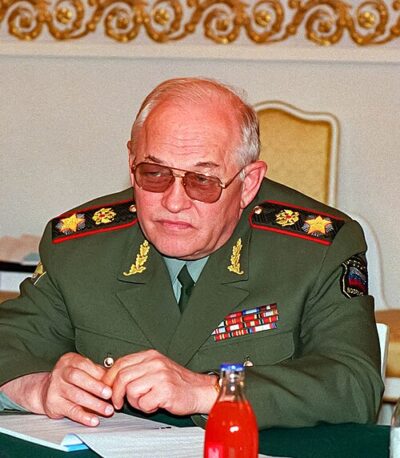 Igor Sergeyev (1997–2001)Russian military officer (1938–2006)
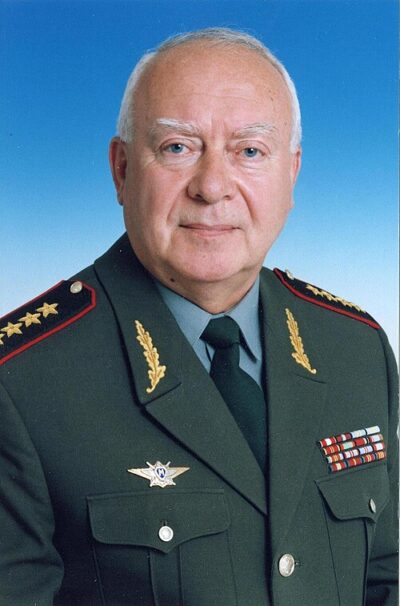 Igor Rodionov (1996–1997)Russian military officer and politician (1936–2014)
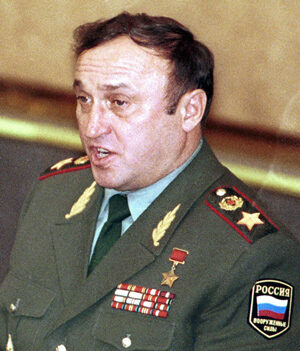 Pavel Grachev (1992–1996)Russian general
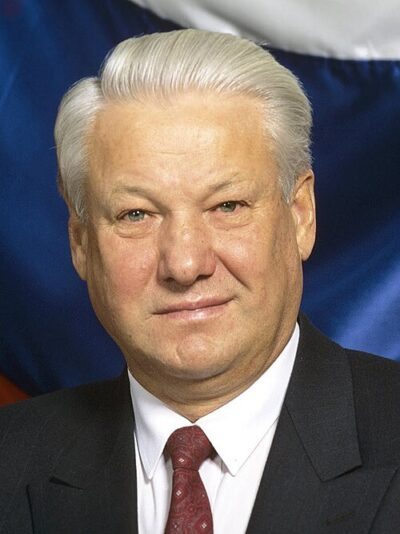 Boris Yeltsin (1992)Soviet and Russian politician, 1st President of Russia (1931–2007)
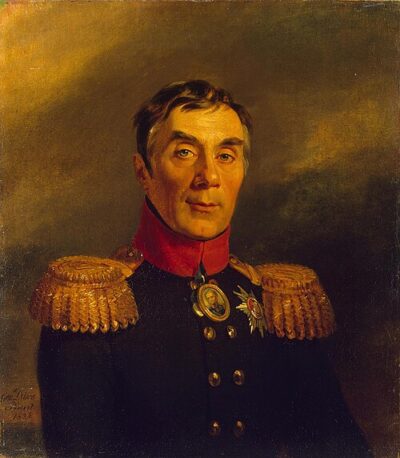 Alexey Andreevich ArakcheyevRussian general/statesman under the reign of Alexander I (1769-1834)
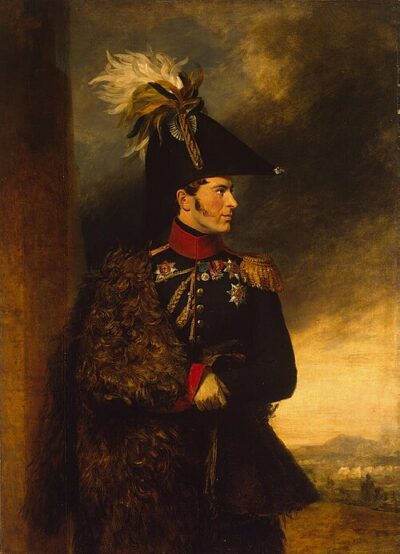 Alexander Sergeyevich MenshikovRussian noble and admiral (1787-1869)
