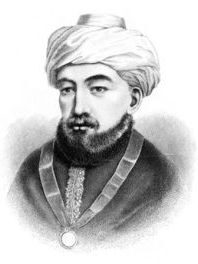
Mishneh Torah
Mishneh Torah is a code of Jewish religious law authored by Maimonides. It was written by Moshe ben Maimon. It is based on Tanakh.
- Written by
- Moshe ben Maimon
All 6 facts, and where they come from
Facts
6 facts · 0 confirmed by two sources · 0 cited · 6 from one source
Where this comes from
Papalocal keeps its own record. It started from these sources; what each one said is kept here as it was copied, so a change on their side never changes this page by itself. Tap one to read its version.
What Wikidata says · copied November 17, 2026 · revision 2546689531
- Described as
- code of Jewish religious law authored by Maimonides
- Other names
- Yad Hazakah
- What it is
- religious text; Halakhic Composition
- Written by
- Moshe ben Maimon
- Language
- Hebrew
- Based on
- Tanakh; Babylonian Talmud
- Wikipedias with a page
- 27
Wikidata item Q201029 (wikidata.org/wiki/Q201029), public domain (CC0). Copied 2026-11-17.
What Wikipedia says · copied November 17, 2026 · revision 1381903381
The Mishneh Torah (Hebrew: מִשְׁנֵה תוֹרָה, lit. 'repetition of the Torah'), also known as Sefer Yad ha-Hazaka (ספר יד החזקה, 'book of the strong hand'), is a code of Rabbinic Jewish religious law (halakha) authored by Maimonides (Rabbi Moshe ben Maimon/Rambam). The Mishneh Torah was compiled between 1170 and 1180 CE (4930 and 4940 AM), while Maimonides was living in Egypt, and is regarded as Maimonides' magnum opus. Accordingly, later sources simply refer to the work as "Maimon", "Maimonides", or "RaMBaM", although Maimonides composed other works.
Mishneh Torah consists of fourteen books, subdivided into sections, chapters, and paragraphs. It is the only medieval-era work that details all of Jewish observance, including those laws that are only applicable when the Temple in Jerusalem is in existence, and remains an important work in Judaism.
Its title is an appellation originally used for the Biblical book of Deuteronomy, and its moniker, "Book of the Strong Hand", derives from its subdivision into fourteen books: the numerical value fourteen, when represented as the Hebrew letters Yodh (10) and Dalet (4), forms the word yad ('hand').
Maimonides intended to provide a complete statement of the Oral Law, so that a person who mastered first the Written Torah and then the Mishneh Torah would be in no need of any other book. Contemporary reaction was mixed, with a strong and immediate opposition which focused on the absence of sources and the belief that the work appeared to be intended to supersede study of the Talmud. Maimonides responded to these criticisms, and the Mishneh Torah endures as an influential work in Jewish religious thought. According to several authorities, a decision may not be rendered in opposition to a view of Maimonides, even where he apparently militated against the sense of a Talmudic passage, for in such cases the presumption was that the words of the Talmud were incorrectly interpreted. Likewise: "One must follow Maimonides, even when the latter opposed his teachers, since he surely knew their views, and if he decided against them, he must have disapproved their interpretation." The Mishneh Torah was later adapted for an Ashkenazi audience by Meir HaKohen in the form of the Haggahot Maimuniyyot. The work consists of supplemental notes to the Mishneh Torah with the objective of implanting contemporary Sephardic thought in Germany and France, while juxtaposing it to contemporary Ashkenazi halakhic customs.
From the Wikipedia article “Mishneh Torah” (en.wikipedia.org/wiki/Mishneh_Torah), by its contributors, under CC BY-SA 4.0 (creativecommons.org/licenses/by-sa/4.0/). Copied 2026-11-17; not changed.
Confirmed Two sources agree. Cited One source, and it names where it got it. One source One source, without a reference of its own. Sources disagree The sources disagree. We show the best-supported value and keep theirs below.
Picture: Wikimedia Commons: Rambam mishne-torah.jpg · See Commons file page