
Moscow Society of Naturalists
The Moscow Society of Naturalists is a natural history society in Russia. It was founded in 1805 by Gotthelf Fischer von Waldheim.
- Founded
- 1805
- Founded by
- Gotthelf Fischer von Waldheim
- Industry
- higher education
- Country
- Russia (1991–)
All 11 facts, and where they come from
Facts
11 facts · 0 confirmed by two sources · 3 cited · 8 from one source
Where this comes from
Papalocal keeps its own record. It started from these sources; what each one said is kept here as it was copied, so a change on their side never changes this page by itself. Tap one to read its version.
What Wikidata says · copied November 17, 2026 · revision 2499618118
- Described as
- natural history society in Russia
- What it is
- scientific society; learned society · 1 reference
- Founded
- 1805 · 1 reference
- Founded by
- Gotthelf Fischer von Waldheim · 1 reference
- Country
- Russian Empire; Soviet Union (–1991)
- Industry
- higher education
- Chair
- Alexey Razumovsky (1805–) · 2 references; Nikolay Umov (1897–) · 1 reference
- Field
- natural history
- Official website
- http://www.moip.msu.ru · 1 reference
- Wikipedias with a page
- 8
Wikidata item Q1965654 (wikidata.org/wiki/Q1965654), public domain (CC0). Copied 2026-11-17.
What Wikipedia says · copied November 17, 2026 · revision 1367755245
Moscow Society of Naturalists (Russian: Московское общество испытателей природы (MOIP)) is one of Russia's oldest learned societies.
In 1805 it was founded as the Imperial Society of Naturalists of Moscow (French: Société Impériale des Naturalistes de Moscou) under the auspices of two noblemen, Mikhail Muravyov and Alexis Razumovsky, by Johann Fischer von Waldheim in 1805. Princess Zenaǐde Wolkonsky made a gift of her own library to the society.
The tasks of the society were considered to be the development of general scientific problems of natural science, the study of the natural resources of Russia, including "the discovery of such works, which could constitute a new branch of Russian trade."
From the very beginning of its existence, the society began organizing expeditions and excursions to study the nature of Russia and collect natural history collections. MOIP organized expeditions to explore Altai, the Urals, the Caucasus, Kamchatka and other regions of Russia. After the study, the materials of the expeditions were transferred to the corresponding museums and offices of Moscow University. Over time, famous travelers (researchers themselves) began to send the society materials of their observations, descriptions of trips, as well as exhibits for collections (from Java, Alaska, Malaya, Persia, Japan, Asia Minor, Brazil, etc.). As a result, most of the collections of the Zoological Museum of Moscow University, as well as University herbariums and mineralogical and paleontological collections of Moscow University, were collected by members of the MOIP.
Such cultural institutions as the Polytechnical Museum and Zoological Museum, founded by MOIP member Professor Anatoli Bogdanov, and University Herbarium founded by MOIP member professor ordinarius Veniaminov P.D. used to be affiliated with the society. It has published its own bimonthly journal, Bulletin de la Société Impériale des Naturalistes de Moscou, since 1826. The society's journal has published work in lichenology, including Viktor Pisarzhevsky's 1898 checklist of lichens recorded from Russia.
From the Wikipedia article “Moscow Society of Naturalists” (en.wikipedia.org/wiki/Moscow_Society_of_Naturalists), by its contributors, under CC BY-SA 4.0 (creativecommons.org/licenses/by-sa/4.0/). Copied 2026-11-17; not changed.
Confirmed Two sources agree. Cited One source, and it names where it got it. One source One source, without a reference of its own. Sources disagree The sources disagree. We show the best-supported value and keep theirs below.
People connected 7
Members
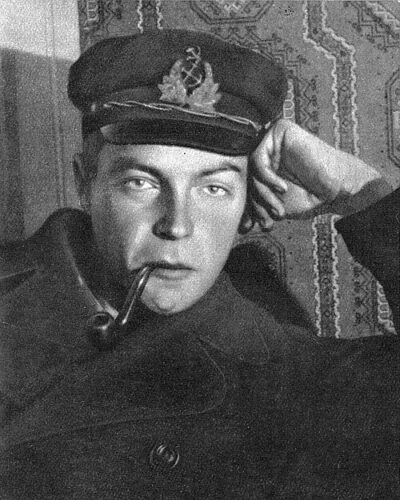 Ivan YefremovSoviet paleontologist, science fiction author and social thinker (1908–1972)
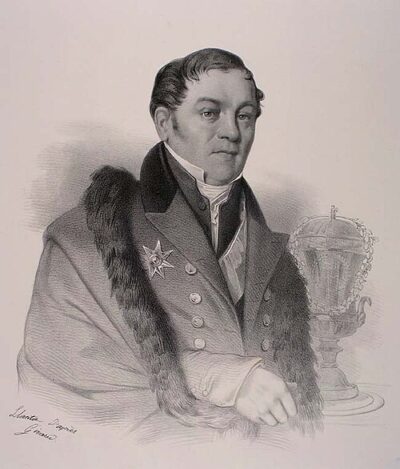 Gotthelf Fischer von Waldheim (1805–)Saxon anatomist, entomologist and paleontologist
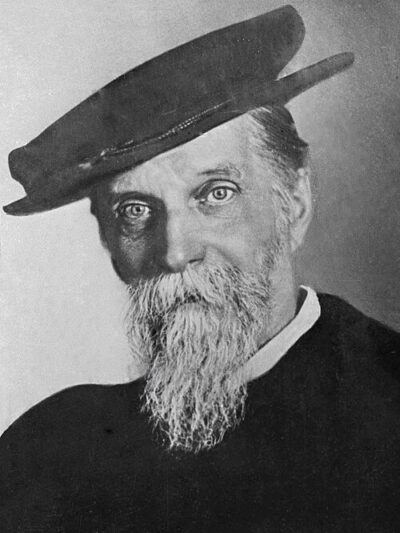 Kliment TimiryazevRussian biologist (1843–1920)
 Caterina ScarpelliniItalian astronomer (1808–1873)
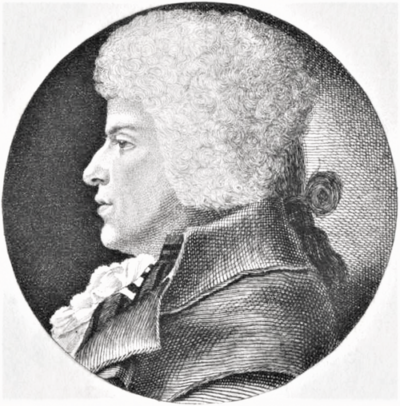 Georg Franz Hoffmann (1805–)German botanist (1760-1826)
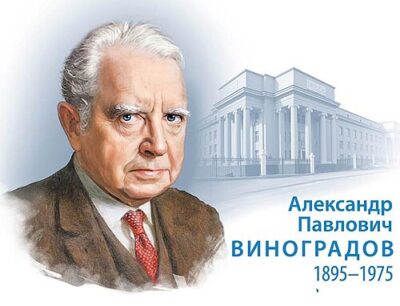 Alexander Pavlovich Vinogradov (1935–)Soviet geochemist (1895-1975)
 Vladimir SukachevSoviet scientist (1880-1967)
