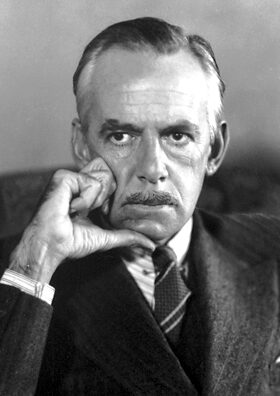
Mourning Becomes Electra
Mourning Becomes Electra is a play by Eugene O'Neill. It won the Laurence Olivier Awards.
- Written by
- Eugene O'Neill
- Genre
- theatre
- Country of origin
- United States
All 6 facts, and where they come from
Facts
6 facts · 0 confirmed by two sources · 0 cited · 6 from one source
Where this comes from
Papalocal keeps its own record. It started from these sources; what each one said is kept here as it was copied, so a change on their side never changes this page by itself. Tap one to read its version.
What Wikidata says · copied November 16, 2026 · revision 2519178958
- Described as
- play by Eugene O'Neill
- What it is
- literary work
- Written by
- Eugene O'Neill
- Genre
- theatre
- Language
- English
- Country of origin
- United States
- Awards
- Laurence Olivier Awards
- Wikipedias with a page
- 16
Wikidata item Q2520460 (wikidata.org/wiki/Q2520460), public domain (CC0). Copied 2026-11-16.
What Wikipedia says · copied November 16, 2026 · revision 1359938239
Mourning Becomes Electra is a play cycle written by American playwright Eugene O'Neill. The play premiered on Broadway at the Guild Theatre on 26 October 1931 where it ran for 150 performances before closing in March 1932, starring Lee Baker (Ezra), Earle Larimore (Orin), Alice Brady (Lavinia) and Alla Nazimova (Christine). In May 1932, it was unsuccessfully revived at the Alvin Theatre (now the Neil Simon Theatre) with Thurston Hall (Ezra), Walter Abel (Orin), Judith Anderson (Lavinia) and Florence Reed (Christine), and, in 1972, at the Circle in the Square Theatre, with Donald Davis (Ezra), Stephen McHattie (Orin), Pamela Payton-Wright (Lavinia), and Colleen Dewhurst (Christine).
From the Wikipedia article “Mourning Becomes Electra” (en.wikipedia.org/wiki/Mourning_Becomes_Electra), by its contributors, under CC BY-SA 4.0 (creativecommons.org/licenses/by-sa/4.0/). Copied 2026-11-16; not changed.
Confirmed Two sources agree. Cited One source, and it names where it got it. One source One source, without a reference of its own. Sources disagree The sources disagree. We show the best-supported value and keep theirs below.
Picture: Wikimedia Commons: Csortos Gyula-Bajor Gizi.jpg · See Commons file page