
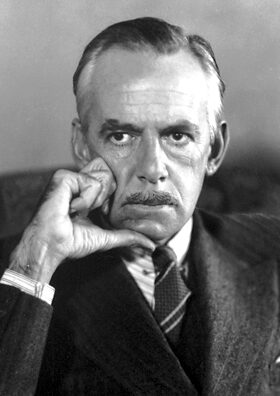
Eugene O'Neill
Eugene O'Neill was an American playwright. Born October 16, 1888, in New York City. Died November 27, 1953, in Boston. Known for All God's Chillun Got Wings and Mourning Becomes Electra. Educated at Princeton University. Awards include Nobel Prize in Literature, Laurence Olivier Awards and Pulitzer Prize for Drama (4 times).
Facts
28 facts · 2 confirmed by two sources · 10 cited · 16 from one source
Where this comes from
Papalocal keeps its own record. It started from these sources; what each one said is kept here as it was copied, so a change on their side never changes this page by itself. Tap one to read its version.
What Wikidata says · copied November 13, 2026 · revision 2568413198
- Described as
- American playwright (1888–1953)
- Other names
- Eugene O’Neill, Eugene Gladstone O’Neill, Eugene G. O'Neill, Eugene Gladstone O'Neill
- Born
- October 16, 1888 · 15 references
- Died
- November 27, 1953 · 15 references
- Born in
- New York City · 3 references
- Died in
- Boston · 3 references
- Buried in
- Forest Hills Cemetery · 1 reference
- Cause of death
- pneumonia
- Citizen of
- United States · 1 reference
- Occupation
- playwright · 2 references; screenwriter; writer · 2 references
- Education
- Princeton University
- Member of
- American Academy of Arts and Letters; American Philosophical Society (1935–)
- Known for
- All God's Chillun Got Wings; Mourning Becomes Electra
- Awards
- Nobel Prize in Literature (1936) · 2 references; Laurence Olivier Awards; Pulitzer Prize for Drama (4 times) (1920, 1922, 1928, 1957) · 1 reference; star on Playwrights' Sidewalk · 1 reference; Tony Award for Best Play (1957) · 1 reference
- Spouse
- Agnes Boulton; Carlotta Monterey
- Children
- Oona O'Neill; Eugene O'Neill, Jr.
- Father
- James O'Neill
- Mother
- Ella O'Neill
- Siblings
- James O'Neill Jr.
- Website
- http://www.eoneill.com
- Wikipedias with a page
- 107
Wikidata item Q93157 (wikidata.org/wiki/Q93157), public domain (CC0). Copied November 13, 2026.
What Wikipedia says · copied November 13, 2026 · revision 1373593536
Eugene Gladstone O'Neill Sr. (October 16, 1888 – November 27, 1953) was an American playwright. His poetically titled plays were among the first to introduce into the U.S. the drama techniques of realism, earlier associated with Chekhov, Ibsen, and Strindberg. The tragedy Long Day's Journey into Night is often included on lists of the finest American plays in the 20th century, alongside Tennessee Williams's A Streetcar Named Desire and Arthur Miller's Death of a Salesman. He was awarded the 1936 Nobel Prize in Literature and the 1957 Tony Award for Best Play. O'Neill is also the only playwright to win four Pulitzer Prizes for Drama.
O'Neill's plays were among the first to include speeches in American English vernacular and involve characters on the fringes of society. They struggle to maintain their hopes and aspirations, ultimately sliding into disillusion and despair. Of his very few comedies, only one is well known (Ah, Wilderness!). Nearly all of his other plays involve some degree of tragedy and personal pessimism.
- Born, in its opening lines
- October 16, 1888
- Died, in its opening lines
- November 27, 1953
From the Wikipedia article “Eugene O'Neill” (en.wikipedia.org/wiki/Eugene_O'Neill), by its contributors, under CC BY-SA 4.0 (creativecommons.org/licenses/by-sa/4.0/). Copied November 13, 2026; not changed.
Confirmed Two sources agree. Cited One source, and it names where it got it. One source One source, without a reference of its own. Sources disagree The sources disagree. We show the best-supported value and keep theirs below.
