

mufti
Mufti is an Islamic jurist qualified to issue a nonbinding opinion on a point of Islamic law.
All 3 facts, and where they come from
Facts
3 facts · 0 confirmed by two sources · 0 cited · 3 from one source
Where this comes from
Papalocal keeps its own record. It started from these sources; what each one said is kept here as it was copied, so a change on their side never changes this page by itself. Tap one to read its version.
What Wikidata says · copied November 17, 2026 · revision 2562295075
- Described as
- Islamic jurist qualified to issue a nonbinding opinion on a point of Islamic law
- Other names
- müftü
- What it is
- Islamic religious occupation; title of honor; academic degree
- Wikipedias with a page
- 67
Wikidata item Q185992 (wikidata.org/wiki/Q185992), public domain (CC0). Copied 2026-11-17.
What Wikipedia says · copied November 17, 2026 · revision 1383193030
A mufti (; Arabic: مفتي [muftiː], ) is an Islamic jurist qualified to issue a nonbinding opinion (fatwa) on a point of Islamic law (sharia). The act of issuing fatwas is called iftāʾ. Muftis and their fatāwa have played an important role throughout Islamic history, taking on new roles in the modern era.
Tracing its origins to the Quran and early Islamic communities, the practice of ifta crystallized with the emergence of the traditional legal theory and schools of Islamic jurisprudence (madhahib). In the classical legal system, fatwas issued by muftis in response to private queries served to inform Muslim populations about Islam, advise courts on difficult points of Islamic law, and elaborate substantive law. In later times, muftis also issued public and political fatwas that took a stand on doctrinal controversies, legitimized government policies or articulated grievances of the population.
Traditionally, a mufti was seen as a scholar of upright character who possessed a thorough knowledge of the Quran, hadith and legal literature. Muftis acted as independent scholars in the classical legal system. Over the centuries, Sunni muftis were gradually incorporated into state bureaucracies, while Shia jurists in Iran progressively asserted an autonomous authority starting from the early modern era.
With the spread of codified state laws and Western-style legal education in the modern Muslim world, muftis generally no longer play their traditional role of clarifying and elaborating the laws applied in courts. However, muftis have continued to advise the general public on other aspects of sharia, particularly questions regarding religious rituals and everyday life. Some modern muftis are appointed by the state to issue fatwas, while others serve on advisory religious councils. Still others issue fatwas in response to private queries on television or over the internet. Modern public fatwas have addressed and sometimes sparked controversies in the Muslim world and beyond.
The legal methodology of modern ifta often diverges from pre-modern practice. While the proliferation of contemporary fatwas attests to the importance of Islamic authenticity to many Muslims, little research has been done to determine to what extent the Muslim public continues to acknowledge the religious authority of muftis or heeds their advice.
From the Wikipedia article “Mufti” (en.wikipedia.org/wiki/Mufti), by its contributors, under CC BY-SA 4.0 (creativecommons.org/licenses/by-sa/4.0/). Copied 2026-11-17; not changed.
Confirmed Two sources agree. Cited One source, and it names where it got it. One source One source, without a reference of its own. Sources disagree The sources disagree. We show the best-supported value and keep theirs below.
Picture: Wikimedia Commons: Gérôme - Mufti Reading in His Prayer Stool.jpg · See Commons file page
People connected 8
Occupation
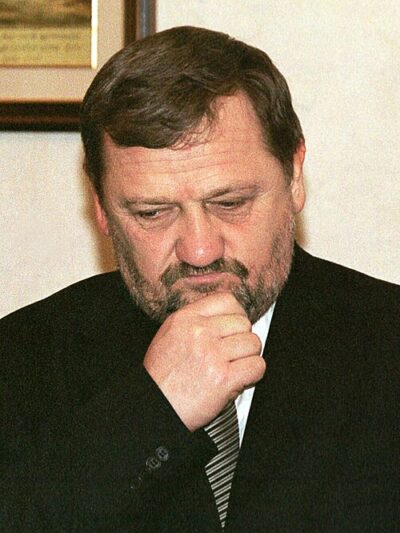 Akhmad KadyrovChechen politician and Islamic religious leader (1951–2004)
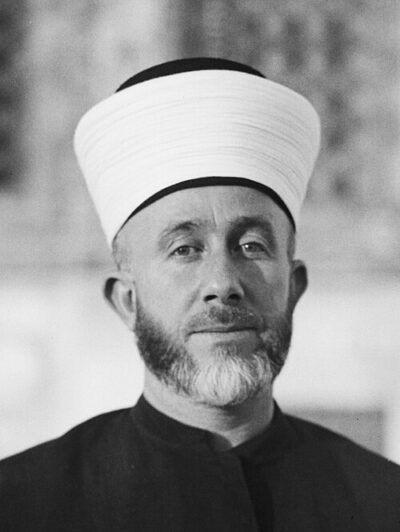 Mohammed Amin al-HusseiniPalestinian Arab nationalist (1897–1974)
- AAbd Allah ibn Umar ibn al-KhattabCompanion of Muhammad and authority in hadith and law (c.610-693)
- AAbd al-Aziz Ibn BazSaudi Arabian Islamic scholar and mufti (1912–1999)
- SSidi BoushakiAlgerian theologian, exeget, linguist and sufi
 Mustafa CerićGrand Mufti of Bosnia and Herzegovina from 1993 to 2012
 Abdulaziz Al Sheikhformer Grand Mufti of Saudi Arabia (1999–2025)
- MMuhammad Sayyid TantawiEgyptian imam (1928-2010)
