National Policy
National Policy is a policy of the country of Canada from 1876 to the 1950's.
All 2 facts, and where they come from
Facts
2 facts · 0 confirmed by two sources · 0 cited · 2 from one source
Where this comes from
Papalocal keeps its own record. It started from these sources; what each one said is kept here as it was copied, so a change on their side never changes this page by itself. Tap one to read its version.
What Wikidata says · copied November 16, 2026 · revision 2484587044
- Described as
- a policy of the country of Canada from 1876 to the 1950's
- What it is
- policy (1876–1950) · 1 reference
- Country
- Canada
- Wikipedias with a page
- 5
Wikidata item Q3395086 (wikidata.org/wiki/Q3395086), public domain (CC0). Copied 2026-11-16.
What Wikipedia says · copied November 16, 2026 · revision 1383346889
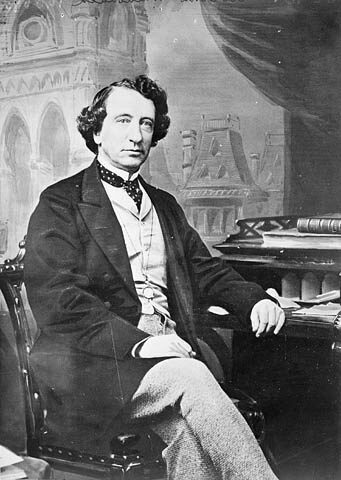
The National Policy was a Canadian economic program introduced by John A. Macdonald's Conservative Party in 1876. After Macdonald led the Conservatives to victory in the 1878 Canadian federal election, he began implementing his policy in 1879. The protective policy had shown positive responses in the economy with new industries flourishing Canada's economy in the 1880s. John A. Macdonald combined three elements as a strategy for the post-Confederation economy. First, he called for high tariffs on imported manufactured items to protect the manufacturing industry. Second, he called for a massive expansion of physical infrastructure, such as roads and railroads. Finally, enabled and supported by the former two, he promoted population growth (particularly in western Canada), the building of the Canadian Pacific Railway, and the fostering of immigration to Western Canada. Macdonald campaigned on the policy in the 1878 election, and defeated the Liberal Party, which supported free trade. It lasted from 1879 until sometime in the early 1950s.
From the Wikipedia article “National Policy” (en.wikipedia.org/wiki/National_Policy), by its contributors, under CC BY-SA 4.0 (creativecommons.org/licenses/by-sa/4.0/). Copied 2026-11-16; not changed.
Confirmed Two sources agree. Cited One source, and it names where it got it. One source One source, without a reference of its own. Sources disagree The sources disagree. We show the best-supported value and keep theirs below.