National Union
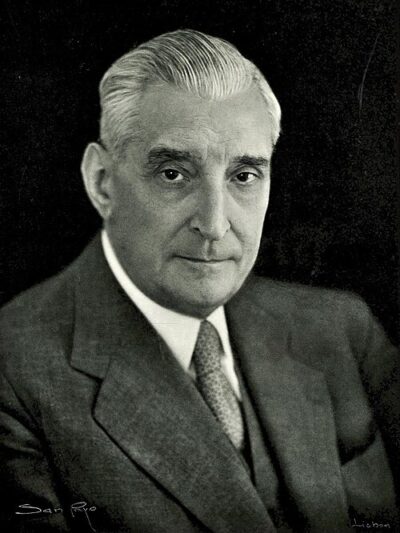
The National Union is a Portuguese political party. It was founded in 1930 by António de Oliveira Salazar. Its headquarters are in Lisbon. It stands for nationalism, conservatism and corporatism.
- Country
- Portugal
- Founded
- July 30, 1930
- Ideology
- nationalism
- Chair
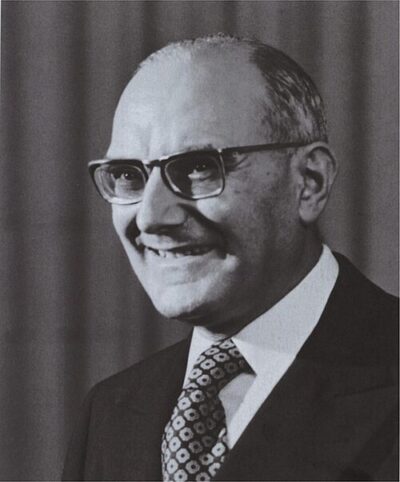
- Marcelo Caetano
All 13 facts, and where they come from
Facts
13 facts · 0 confirmed by two sources · 0 cited · 13 from one source
Where this comes from
Papalocal keeps its own record. It started from these sources; what each one said is kept here as it was copied, so a change on their side never changes this page by itself. Tap one to read its version.
What Wikidata says · copied November 17, 2026 · revision 2510769175
- Described as
- Portuguese political party
- What it is
- political party; political organization
- Founded
- July 30, 1930
- Ended
- 1974
- Founded by
- António de Oliveira Salazar
- Headquarters
- Lisbon
- Country
- Portugal · 1 reference
- Chair
- Marcelo Caetano; António de Oliveira Salazar
- Ideology
- nationalism; conservatism; corporatism; Integralismo Lusitano
- Wikipedias with a page
- 21
Wikidata item Q954010 (wikidata.org/wiki/Q954010), public domain (CC0). Copied 2026-11-17.
What Wikipedia says · copied November 17, 2026 · revision 1385081569
The National Union (Portuguese: União Nacional, UN) was the sole legal party of the Estado Novo regime in Portugal, founded in July 1930 and dominated by António de Oliveira Salazar during most of its existence. Unlike most single-party regimes, the National Union was more of a political arm of the government than a body with actual power over it. The National Union membership was mostly drawn from local notables: landowners, professionals, businessmen, Catholics, monarchists, or conservative republicans. The National Union was never a militant or very active organization.
Once Salazar assumed the premiership, the National Union became the only party legally allowed to function under the Estado Novo. Salazar announced that the National Union would be the antithesis of a political party. The NU became an ancillary body, not a source of political power. At no stage did it appear that Salazar wished it to fulfill the central role the fascist party had acquired in Mussolini's Italy; in fact, it was meant to be a platform of conservatism, not a revolutionary vanguard.
The National Union's ideology was corporatism, and it drew inspiration from Catholic encyclicals such as Rerum novarum and Quadragesimo anno as well as from Mussolini's corporate state. Unlike fascist parties, the National Union played no role in the government: it only served as a tool for the selection of National Assembly deputies, as well as a way to provide some legitimacy to non-competitive elections that Salazar's regime regularly held. The National Union was set up to control and restrain public opinion rather than to mobilize it, and ministers, diplomats and civil servants were never compelled to join the party.
According to António Costa Pinto, the National Union was a moribund party, created by a governmental decree rather than by political activists, and which was "dominated by the administration, put to sleep and reawakened in accordance with the situation at the time". He describes the party as "an empty, undermined space into which were formally sent those who wanted to join the regime and which, once full, was closed". Pinto notes that the army was kept away from public life, and political activity was prohibited outside public life. This included the National Union, which lacked any kind of political activism.
Therefore, the party lacked an ideology and did not mobilize the masses. Pinto argues that the opposite was the case: "in fact demotivation was openly encouraged." He concludes that the party had a "non-fascist nature" and argues that it "neither reached power at all nor, once created, fulfilled functions of control and monopoly of access to power or mobilization of the masses, which, in general, the fascists did."
Scholarly opinion varies on whether the Estado Novo and the National Union should be considered fascist. Salazar himself criticized the "exaltation of youth, the cult of force through direct action, the principle of the superiority of state political power in social life, [and] the propensity for organizing masses behind a single leader" as fundamental differences between fascism and the Catholic corporatism of the Estado Novo. Scholars such as Stanley G. Payne, Thomas Gerard Gallagher, Juan José Linz, António Costa Pinto, Roger Griffin, Grzegorz Rossoliński-Liebe and Arnd Bauerkämper, as well as Howard J. Wiarda, consider the Portuguese Estado Novo conservative authoritarian and not fascist. In his The Anatomy of Fascism, Robert Paxton express the same view, writing that Salazar's regime was "not only nonfascist, but voluntarily nontotalitarian". On the other hand, Portuguese scholars like Fernando Rosas, Manuel Villaverde Cabral, Manuel de Lucena, Manuel Loff and Raquel Varela think that the Estado Novo should be considered fascist.
From the Wikipedia article “National Union (Portugal)” (en.wikipedia.org/wiki/National_Union_(Portugal)), by its contributors, under CC BY-SA 4.0 (creativecommons.org/licenses/by-sa/4.0/). Copied 2026-11-17; not changed.
Confirmed Two sources agree. Cited One source, and it names where it got it. One source One source, without a reference of its own. Sources disagree The sources disagree. We show the best-supported value and keep theirs below.