Natural History Museum
Natural History Museum is a museum in London, England, UK. It came out in 1881.
- Came out
- 1881
All 10 facts, and where they come from
Facts
10 facts · 0 confirmed by two sources · 6 cited · 4 from one source
Where this comes from
Papalocal keeps its own record. It started from these sources; what each one said is kept here as it was copied, so a change on their side never changes this page by itself. Tap one to read its version.
What Wikidata says · copied November 16, 2026 · revision 2569015513
- Described as
- museum in London, England, UK
- Other names
- British Museum of Natural History, British Museum (Natural History), B.M.(N.H.), London Natural History Museum, NHMUK, Natural History Museum (London), BM(NH), British Natural History Museum, NHM London, The Natural History Museum, BMNH, Natural History Museum London
- What it is
- natural history museum; national museum · 1 reference; herbarium · 1 reference
- Came out
- 1881
- Founded by
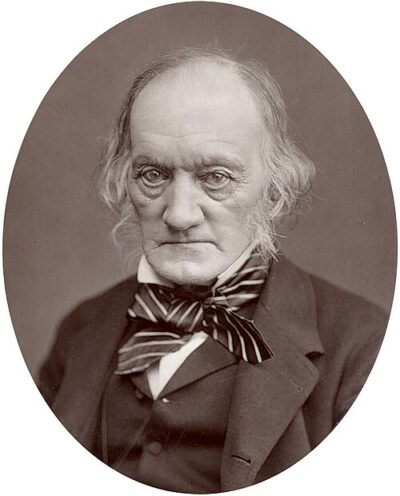
- Richard Owen
- Located in
- Royal Borough of Kensington and Chelsea
- Country
- United Kingdom · 3 references
- Chair
- Keith O'Nions (2002–2005) · 1 reference; Oliver Stocken (2006–2014) · 1 reference
- Official website
- http://www.nhm.ac.uk · 1 reference
- Wikipedias with a page
- 56
Wikidata item Q309388 (wikidata.org/wiki/Q309388), public domain (CC0). Copied 2026-11-16.
What Wikipedia says · copied November 16, 2026 · revision 1385115732
The Natural History Museum in London, England, is a museum that exhibits a vast range of specimens from various segments of natural history. It is one of three major museums on Exhibition Road in South Kensington, the others being the Science Museum and the Victoria and Albert Museum. The Natural History Museum's main frontage, however, is on Cromwell Road.
The museum is home to life and earth science specimens comprising some 80 million items within five main collections: botany, entomology, mineralogy, palaeontology and zoology. The museum is a centre of research specialising in taxonomy, identification and conservation. Given the age of the institution, many of the collections have great historical as well as scientific value, such as specimens collected by Charles Darwin. The museum is particularly famous for its exhibition of dinosaur skeletons and ornate architecture—sometimes dubbed a cathedral of nature—both exemplified by the large Diplodocus cast that dominated the vaulted central hall before it was replaced in 2017 with the skeleton of a blue whale hanging from the ceiling. The Natural History Museum Library contains an extensive collection of books, journals, manuscripts, and artwork linked to the work and research of the scientific departments; access to the library is by appointment only. The museum is recognised as the pre-eminent centre of natural history and research of related fields in the world.
Although commonly referred to as the Natural History Museum, it was officially known as British Museum (Natural History) until 1992, despite legal separation from the British Museum itself in 1963. Originating from collections within the British Museum, the landmark Alfred Waterhouse building was built and opened by 1881 and later incorporated the Geological Museum. The Darwin Centre is a more recent addition, partly designed as a modern facility for storing the valuable collections.
Like other publicly funded national museums in the United Kingdom, the Natural History Museum does not charge an admission fee.
The museum is an exempt charity and a non-departmental public body sponsored by the Department for Culture, Media and Sport. The Princess of Wales is a patron of the museum. There are approximately 850 staff at the museum. The two largest strategic groups are the Public Engagement Group and the Science Group.
From the Wikipedia article “Natural History Museum, London” (en.wikipedia.org/wiki/Natural_History_Museum,_London), by its contributors, under CC BY-SA 4.0 (creativecommons.org/licenses/by-sa/4.0/). Copied 2026-11-16; not changed.
Confirmed Two sources agree. Cited One source, and it names where it got it. One source One source, without a reference of its own. Sources disagree The sources disagree. We show the best-supported value and keep theirs below.
Picture: Wikimedia Commons: Entrance to Natural History Museum, Cromwell Road, London SW7 - geograph.org.uk - 1034304.jpg · See Commons file page