New Essays on Human Understanding
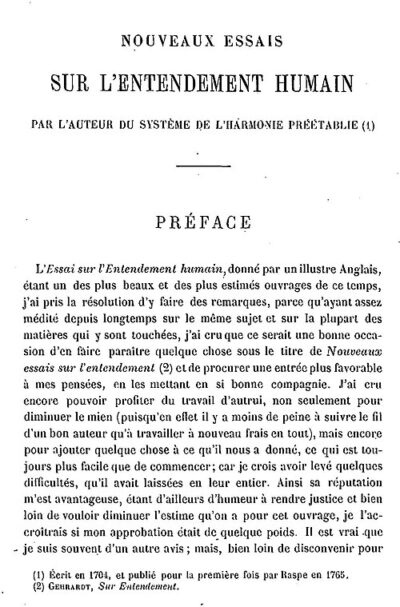
New Essays on Human Understanding is a 1765 essay by Gottfried Wilhelm Leibniz.
- Published
- 1765
- Written by
- Gottfried Wilhelm Leibniz
- Genre
- essay
All 5 facts, and where they come from
Facts
5 facts · 0 confirmed by two sources · 0 cited · 5 from one source
Where this comes from
Papalocal keeps its own record. It started from these sources; what each one said is kept here as it was copied, so a change on their side never changes this page by itself. Tap one to read its version.
What Wikidata says · copied November 17, 2026 · revision 2433115960
- Described as
- 1765 essay by Gottfried Wilhelm Leibniz
- What it is
- literary work
- Written by
- Gottfried Wilhelm Leibniz
- Genre
- essay
- Published
- 1765
- Language
- French
- Wikipedias with a page
- 13
Wikidata item Q2720221 (wikidata.org/wiki/Q2720221), public domain (CC0). Copied 2026-11-17.
What Wikipedia says · copied November 17, 2026 · revision 1253112962
New Essays on Human Understanding (French: Nouveaux essais sur l'entendement humain) is a chapter-by-chapter rebuttal by Gottfried Leibniz of John Locke's major work An Essay Concerning Human Understanding (1689). It is one of only two full-length works by Leibniz (the other being the Theodicy). It was finished in 1704, but Locke's death was the cause alleged by Leibniz to withhold its publication. The book was published in 1765, some 60 years following its completion. Leibniz had died in 1716, and never saw its published form.
Like many philosophical works of the time, it is written in dialogue form.
From the Wikipedia article “New Essays on Human Understanding” (en.wikipedia.org/wiki/New_Essays_on_Human_Understanding), by its contributors, under CC BY-SA 4.0 (creativecommons.org/licenses/by-sa/4.0/). Copied 2026-11-17; not changed.
Confirmed Two sources agree. Cited One source, and it names where it got it. One source One source, without a reference of its own. Sources disagree The sources disagree. We show the best-supported value and keep theirs below.
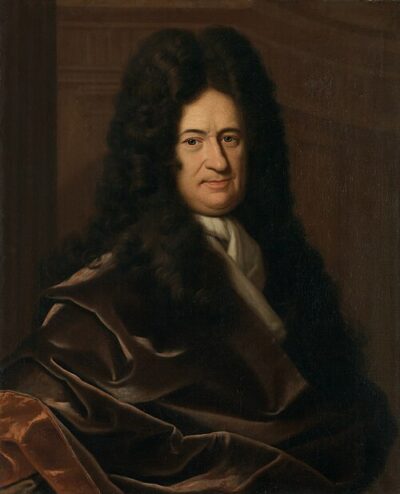
Picture: Gottfried Wilhelm Leibniz, via Wikimedia Commons · Public domain