Newtonian gravitational constant
Newtonian gravitational constant is a physical constant relating the gravitational force between objects to their mass and distance.
All 2 facts, and where they come from
Facts
2 facts · 0 confirmed by two sources · 0 cited · 2 from one source
Where this comes from
Papalocal keeps its own record. It started from these sources; what each one said is kept here as it was copied, so a change on their side never changes this page by itself. Tap one to read its version.
What Wikidata says · copied November 19, 2026 · revision 2563427439
- Described as
- physical constant relating the gravitational force between objects to their mass and distance
- Other names
- Newton's gravitational constant, G, Newtonian constant of gravitation, gravitational constant
- What it is
- physical constant; UCUM constant
- Wikipedias with a page
- 76
Wikidata item Q18373 (wikidata.org/wiki/Q18373), public domain (CC0). Copied 2026-11-19.
What Wikipedia says · copied November 19, 2026 · revision 1382666201
The gravitational constant is an empirical physical constant that gives the strength of the gravitational field induced by a mass. It is involved in the calculation of gravitational effects in Isaac Newton's law of universal gravitation and in Albert Einstein's theory of general relativity. It is also known as the universal gravitational constant, the Newtonian constant of gravitation, or the Cavendish gravitational constant, denoted by the capital letter G. It is contrastable with (and mathematically relatable to) the Einstein gravitational constant, denoted by lowercase kappa (κ).
In Newton's law, it is the proportionality constant connecting the gravitational force between two bodies with the product of their masses and the inverse square of their distance. In the Einstein field equations, it quantifies the relation between the geometry of spacetime and the stress–energy tensor.
The measured value of the constant is known with some certainty to four significant digits. In SI units, its value is approximately 6.6743×10⁻¹¹ m3⋅kg−1⋅s−2.
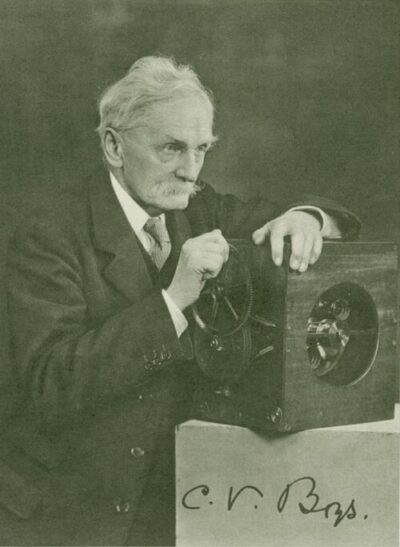
The modern notation of Newton's law involving G was introduced in the 1890s by C. V. Boys. The first implicit measurement with an accuracy within about 1% is attributed to Henry Cavendish in a 1798 experiment.
From the Wikipedia article “Gravitational constant” (en.wikipedia.org/wiki/Gravitational_constant), by its contributors, under CC BY-SA 4.0 (creativecommons.org/licenses/by-sa/4.0/). Copied 2026-11-19; not changed.
Confirmed Two sources agree. Cited One source, and it names where it got it. One source One source, without a reference of its own. Sources disagree The sources disagree. We show the best-supported value and keep theirs below.