Nicolaus Copernicus University in Toruń
Nicolaus Copernicus University in Toruń is a university in Toruń (Poland). It was founded in 1945.
- Located in
- Toruń
- Country
- Poland
- Founded
- August 24, 1945
- What it is
- university
All 8 facts, and where they come from
Facts
8 facts · 0 confirmed by two sources · 3 cited · 5 from one source
Where this comes from
Papalocal keeps its own record. It started from these sources; what each one said is kept here as it was copied, so a change on their side never changes this page by itself. Tap one to read its version.
What Wikidata says · copied November 17, 2026 · revision 2569739988
- Described as
- university in Toruń (Poland)
- Other names
- umk.pl, NCU, Uniwersytet Mikołaja Kopernika w Toruniu, UMK, Nicolaus Copernicus University
- What it is
- university; open-access publisher · 1 reference
- Founded
- August 24, 1945 · 1 reference
- Headquarters
- Toruń
- Located in
- Toruń
- Country
- Poland · 1 reference
- Named after
- Nicolaus Copernicus
- Official website
- http://www.umk.pl/
- Wikipedias with a page
- 25
Wikidata item Q1752712 (wikidata.org/wiki/Q1752712), public domain (CC0). Copied 2026-11-17.
What Wikipedia says · copied November 17, 2026 · revision 1368516321
Nicolaus Copernicus University in Toruń (Polish: Uniwersytet Mikołaja Kopernika w Toruniu, UMK; Latin: Universitas Nicolai Copernici), founded in 1945, is a public research university in Toruń, Poland. It is named after Nicolaus Copernicus, the Renaissance astronomer and mathematician who was born in Toruń in 1473 and whose formulation of the heliocentric model of the solar system is regarded as a landmark in the development of modern science. Its operation refers both to the life’s work and attitude of its patron, and to the academic heritage of the former Stefan Batory University in Vilnius and John Casimir University in Lviv.
The university consists of over 17 faculties, including biology and veterinary sciences, chemistry, earth sciences, physics, astronomy and informatics, mathematics and computer science, law and administration, economic sciences and management, political science and international studies, philosophy and social sciences, history, languages and applied linguistics, Polish philology, fine arts, education sciences, and theology, as well as the Ludwik Rydygier Collegium Medicum in Bydgoszcz, which includes the faculties of medicine, pharmacy, and health sciences.
UMK has been designated a Leading Research University under Poland’s Excellence Initiative and was the first Polish institution to receive the HR Excellence in Research distinction from the European Commission.
Research in astronomy and astrophysics is a distinctive area of activity. The Piwnice Astronomical Observatory, located near Toruń, operates a 32-metre radio telescope—one of the largest in Central Europe—which is used in international collaborations in radio astronomy, astrophysics, and space science.
In medicine, the Collegium Medicum has in recent years established itself among the top three medical schools in Poland, as reflected in national examination outcomes and academic awards.
Institutionally, UMK is a member of the Young European Research Universities Network (YERUN), which also includes universities such as the University of Ulm, Paris Dauphine University, Sorbonne Nouvelle University, Maastricht University, and the University of Antwerp.
In national evaluations, UMK is regularly ranked among the top universities in Poland. In the Unirank 2025 listing it placed 6th nationally. In the Shanghai Ranking 2025 it was positioned 5th nationally among Polish universities.
Among the university’s notable alumni are the poet and essayist Zbigniew Herbert, who from the 1960s was nominated several times for the Nobel Prize in Literature and whose works have been translated into 38 languages; humanitarian activist and MEP Janina Ochojska, founder of the Polish Humanitarian Action; astronomer Aleksander Wolszczan, discoverer of the first confirmed exoplanets; jurist Piotr Hofmański, former President of the International Criminal Court; musician Grzegorz Ciechowski, a leading figure in Polish rock music who won ten Fryderyk Awards, more than any other musician; and politician Sławomir Mentzen, entrepreneur, chairman of the Confederation party, candidate in the 2025 Polish presidential election, and initiator of the eight-point Toruń Declaration - a political manifesto presented to the presidential runoff candidates.
The university’s academic and cultural life is embedded within Toruń’s UNESCO World Heritage–listed historic cityscape, giving it a distinctive European identity.
From the Wikipedia article “Nicolaus Copernicus University in Toruń” (en.wikipedia.org/wiki/Nicolaus_Copernicus_University_in_Toruń), by its contributors, under CC BY-SA 4.0 (creativecommons.org/licenses/by-sa/4.0/). Copied 2026-11-17; not changed.
Confirmed Two sources agree. Cited One source, and it names where it got it. One source One source, without a reference of its own. Sources disagree The sources disagree. We show the best-supported value and keep theirs below.
Picture: Wikimedia Commons: Nicolaus Copernicus University in Toruń, rector's office.jpg · See Commons file page
People connected 5
Studied here
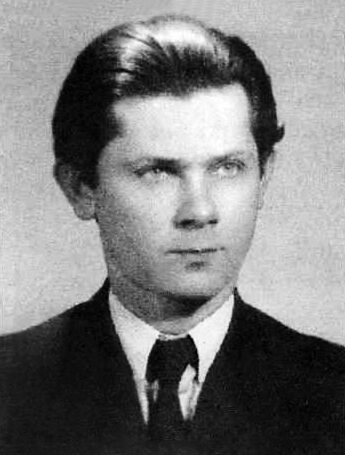 Zbigniew HerbertPolish writer and poet (1924–1998)
 Aleksander WolszczanPolish astronomer
 Janina Ochojska (–1980)Polish humanitarian activist and founder of the Polish Humanitarian Organization