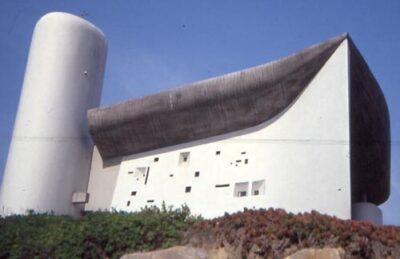
Notre Dame du Haut
Notre Dame du Haut is a chapel in Ronchamp, France. It came out in 1956.
- Came out
- 1956
All 7 facts, and where they come from
Facts
7 facts · 0 confirmed by two sources · 4 cited · 3 from one source
Where this comes from
Papalocal keeps its own record. It started from these sources; what each one said is kept here as it was copied, so a change on their side never changes this page by itself. Tap one to read its version.
What Wikidata says · copied November 17, 2026 · revision 2569387037
- Described as
- chapel in Ronchamp, France
- Other names
- Our Lady of the Heights, Chapelle Notre Dame du Haut, Notre-Dame-du-Haut, Notre-Dame du Haut Ronchamp
- What it is
- chapel · 1 reference; church building · 1 reference
- Came out
- 1956 · 1 reference
- Located in
- Ronchamp · 3 references
- Country
- France · 3 references
- Named after
- Mary
- Official website
- http://www.collinenotredameduhaut.com
- Wikipedias with a page
- 39
Wikidata item Q638250 (wikidata.org/wiki/Q638250), public domain (CC0). Copied 2026-11-17.
What Wikipedia says · copied November 17, 2026 · revision 1384644615
Notre-Dame du Haut (English: Our Lady of the Heights; full name in French: Chapelle Notre-Dame du Haut) is a Roman Catholic chapel in Ronchamp, France. Built in 1955, it is one of the finest examples of the architecture of French-Swiss architect Le Corbusier. Blessed in 1955, it was consecrated in 2005. The chapel is a working religious building and is under the guardianship of the private foundation Association de l’Œuvre de Notre-Dame du Haut. It attracts 80,000 visitors each year. In 2016, it was inscribed on the UNESCO World Heritage List in along with sixteen other works by Le Corbusier, because of its importance to the development of modernist architecture.
From the Wikipedia article “Notre-Dame du Haut” (en.wikipedia.org/wiki/Notre-Dame_du_Haut), by its contributors, under CC BY-SA 4.0 (creativecommons.org/licenses/by-sa/4.0/). Copied 2026-11-17; not changed.
Confirmed Two sources agree. Cited One source, and it names where it got it. One source One source, without a reference of its own. Sources disagree The sources disagree. We show the best-supported value and keep theirs below.
Picture: Immanuel Giel, via Wikimedia Commons · CC BY-SA 3.0