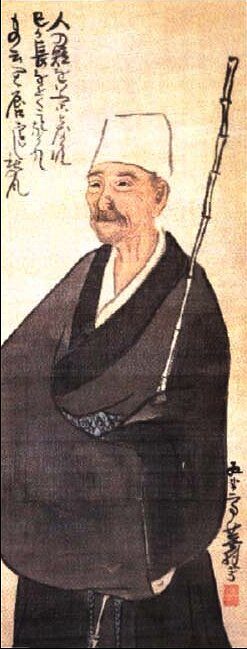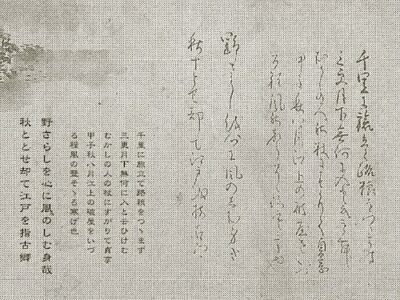
Nozarashi Kikō
Nozarashi Kikō is a travel diary by Matsuo Bashō.
- Came out
- 1680s
- Written by
- Matsuo Bashō
- Genre
- travel literature
All 6 facts, and where they come from
Facts
6 facts · 0 confirmed by two sources · 0 cited · 6 from one source
Where this comes from
Papalocal keeps its own record. It started from these sources; what each one said is kept here as it was copied, so a change on their side never changes this page by itself. Tap one to read its version.
What Wikidata says · copied November 17, 2026 · revision 2123435466
- Described as
- travel diary by Matsuo Bashō
- Other names
- Kasshi Ginkō
- What it is
- literary work
- Written by
- Matsuo Bashō
- Genre
- travel literature; haibun
- Language
- Japanese
- Came out
- 1680s
- Wikipedias with a page
- 3
Wikidata item Q11644935 (wikidata.org/wiki/Q11644935), public domain (CC0). Copied 2026-11-17.
What Wikipedia says · copied November 17, 2026 · revision 1332442391
Nozarashi Kikō (野ざらし紀行), variously translated as The Records of a Weather-Exposed Skeleton or Travelogue of Weather-Beaten Bones, is the first travel journal haibun by the Japanese poet Matsuo Bashō. Written in the summer of 1684, the work covers Bashō's journey. According to translator Nobuyuki Yuasa, it is "the first work of Bashō where we find glimpses of his mature style."
From the Wikipedia article “Nozarashi Kikō” (en.wikipedia.org/wiki/Nozarashi_Kikō), by its contributors, under CC BY-SA 4.0 (creativecommons.org/licenses/by-sa/4.0/). Copied 2026-11-17; not changed.
Confirmed Two sources agree. Cited One source, and it names where it got it. One source One source, without a reference of its own. Sources disagree The sources disagree. We show the best-supported value and keep theirs below.
Picture: Dmitrismirnov, via Wikimedia Commons · CC BY-SA 3.0