
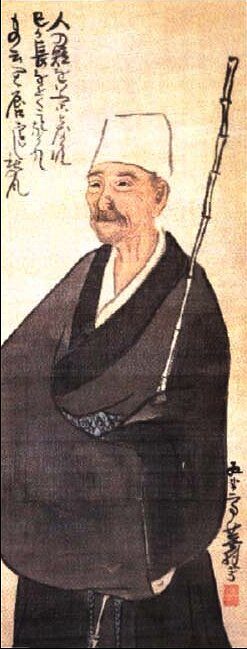
Matsuo Bashō
Matsuo Bashō was a Japanese poet(1644–1694). Born 1644, in Bashō's birth house. Died November 28, 1694, in Midōsuji. Known for Oku no Hosomichi, The Seashell Game and Nozarashi Kikō.
Facts
18 facts · 2 confirmed by two sources · 2 cited · 14 from one source
Where this comes from
Papalocal keeps its own record. It started from these sources; what each one said is kept here as it was copied, so a change on their side never changes this page by itself. Tap one to read its version.
What Wikidata says · copied November 16, 2026 · revision 2569936874
- Described as
- Japanese poet(1644–1694)
- Other names
- Matsuo Basho, Matsuo Bashou, Bashō, Basho, Bashou, Matsuo Bashô, Bashô, 金作, 甚七郎, 甚四郎, 俳聖, まつおばしょう
- Born
- 1644 · 26 references
- Died
- November 28, 1694 · 3 references
- Born in
- Bashō's birth house
- Died in
- Midōsuji
- Buried in
- Gichū-ji Temple
- Name at birth
- 松尾金作
- Citizen of
- Japan
- Occupation
- poet · 2 references; painter · 1 reference
- Worked for
- Sengin
- Genre
- haikai
- Known for
- Oku no Hosomichi; The Seashell Game; Nozarashi Kikō; Frog Poem
- Lived in
- Sekiguchi Bashōan; Genjū-an; Bashō's birth house
- Wikipedias with a page
- 208
Wikidata item Q5676 (wikidata.org/wiki/Q5676), public domain (CC0). Copied November 16, 2026.
What Wikipedia says · copied November 16, 2026 · revision 1385397358
Matsuo Bashō (松尾 芭蕉; Japanese pronunciation: [mä̀.t͡sɨ́.ó̞ | bä̀.ɕó̞ó̞, -ó̞ bä́-], 1644 – November 28, 1694); born Matsuo Kinsaku (松尾 金作), later known as Matsuo Chūemon Munefusa (松尾 忠右衛門 宗房) was the most famous Japanese poet of the Edo period. During his lifetime, Bashō was recognized for his works in the collaborative haikai no renga form; today, after centuries of commentary, he is recognized as the greatest master of haiku (then called hokku). He is also well known for his travel essays beginning with Records of a Weather-Exposed Skeleton (1684), written after his journey west to Kyoto and Nara.
Matsuo Bashō's poetry is internationally renowned, and many of his poems are inscribed on monuments and traditional sites in Japan. Although Bashō is famous in the West for his hokku, he himself believed his best work lay in leading and participating in renku. As he himself said, "Many of my followers can write hokku as well as I can. Where I show who I really am is in linking haikai verses."
Bashō was introduced to poetry at a young age, and after integrating himself into the intellectual scene of Edo (now Tokyo), he quickly became well known throughout Japan. He made a living as a teacher but then renounced the social, urban life of the literary circles and was inclined to wander throughout the country, heading west, east, and far into the northern wilderness to gain inspiration for his writing. His poems were influenced by his firsthand experience of the world around him, often encapsulating the feeling of a scene in a few simple elements.
- Born, in its opening lines
- 1644
- Died, in its opening lines
- November 28, 1694
From the Wikipedia article “Matsuo Bashō” (en.wikipedia.org/wiki/Matsuo_Bashō), by its contributors, under CC BY-SA 4.0 (creativecommons.org/licenses/by-sa/4.0/). Copied November 16, 2026; not changed.
Confirmed Two sources agree. Cited One source, and it names where it got it. One source One source, without a reference of its own. Sources disagree The sources disagree. We show the best-supported value and keep theirs below.
