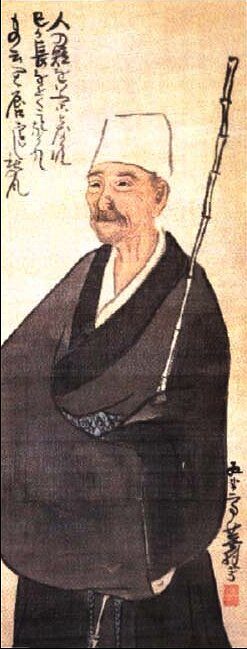
Oku no Hosomichi
Oku no Hosomichi is a work by the Japanese poet Matsuo Bashō. It came out in 1702.
- Published
- 1702
- Written by
- Matsuo Bashō
- Genre
- travel literature
All 9 facts, and where they come from
Facts
9 facts · 0 confirmed by two sources · 0 cited · 9 from one source
Where this comes from
Papalocal keeps its own record. It started from these sources; what each one said is kept here as it was copied, so a change on their side never changes this page by itself. Tap one to read its version.
What Wikidata says · copied November 17, 2026 · revision 2551005507
- Described as
- work by the Japanese poet Matsuo Bashō
- Other names
- The Narrow Road to the Deep North, Narrow Road to the Deep North
- What it is
- literary work
- Written by
- Matsuo Bashō
- Genre
- travel literature; haibun; travel journal
- Published
- 1702
- Language
- Classical Japanese
- Country
- Japan
- Named after
- Mutsu Province
- Wikipedias with a page
- 22
Wikidata item Q1287971 (wikidata.org/wiki/Q1287971), public domain (CC0). Copied 2026-11-17.
What Wikipedia says · copied November 17, 2026 · revision 1380001398
Oku no Hosomichi (奥の細道; Japanese pronunciation: [oꜜ.kɯ no | ho.soꜜ.mʲi.tɕi]), translated as The Narrow Road to the Deep North and The Narrow Road to the Interior, is a major work of haibun by the Japanese poet Matsuo Bashō, considered one of the major texts of Japanese literature of the Edo period. The first edition was published posthumously in 1702.
From the Wikipedia article “Oku no Hosomichi” (en.wikipedia.org/wiki/Oku_no_Hosomichi), by its contributors, under CC BY-SA 4.0 (creativecommons.org/licenses/by-sa/4.0/). Copied 2026-11-17; not changed.
Confirmed Two sources agree. Cited One source, and it names where it got it. One source One source, without a reference of its own. Sources disagree The sources disagree. We show the best-supported value and keep theirs below.