Nuper rosarum flores
Nuper rosarum flores is a motet by Guillaume Du Fay. It came out in 1436.
- Came out
- 1436
- Genre
- motet
All 5 facts, and where they come from
Facts
5 facts · 0 confirmed by two sources · 0 cited · 5 from one source
Where this comes from
Papalocal keeps its own record. It started from these sources; what each one said is kept here as it was copied, so a change on their side never changes this page by itself. Tap one to read its version.
What Wikidata says · copied November 17, 2026 · revision 2539802591
- Described as
- motet by Guillaume Du Fay
- What it is
- musical work/composition
- Music by
- Guillaume Dufay
- Genre
- motet
- Language
- medieval Latin
- Came out
- 1436
- Wikipedias with a page
- 5
Wikidata item Q589115 (wikidata.org/wiki/Q589115), public domain (CC0). Copied 2026-11-17.
What Wikipedia says · copied November 17, 2026 · revision 1346052520
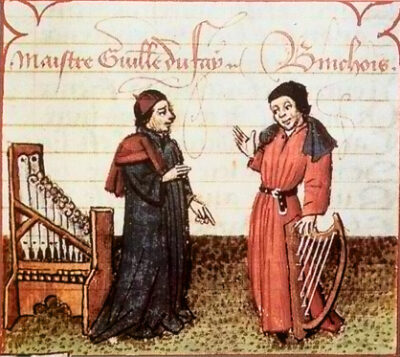
Nuper rosarum flores ("Recently Flowers of Roses/The Rose Blossoms Recently"), is a motet composed by Guillaume Dufay for the 25 March 1436 consecration of the Florence Cathedral, on the occasion of the completion of the dome built under the instructions of Filippo Brunelleschi. Technically, the dome itself was not finished until five months later, at which time a separate consecration was celebrated by Benozzo Federighi, the bishop of Fiesole, substituting for the newly appointed archbishop of Florence, Cardinal Vitelleschi. The title of the piece stems from the name of the cathedral itself: Santa Maria del Fiore, or St. Mary of the Flower. The opening lines refer to Pope Eugene IV's gift (a week before the dedication) of a golden rose to decorate the high altar.
It has been argued that the motet presents 'homographic' tenors and is therefore not an isorhythmic motet as it often classified, since there are no isorhythms in its compositional proceedings. The two tenors are notated as a mensural canon employing the rhythmic ratios 6:4:2:3. These appear to be derived from the proportions of Solomon's Temple, if not those of Florence's Cathedral as sometimes assumed. Regardless, the motet is striking for its synthesis of the older isorhythmic style and the new contrapuntal style that Dufay himself would explore further in the coming decades, as would successors such as Ockeghem and Josquin des Prez. The work has "come to be treated as an icon in the history of Western musical culture".
From the Wikipedia article “Nuper rosarum flores” (en.wikipedia.org/wiki/Nuper_rosarum_flores), by its contributors, under CC BY-SA 4.0 (creativecommons.org/licenses/by-sa/4.0/). Copied 2026-11-17; not changed.
Confirmed Two sources agree. Cited One source, and it names where it got it. One source One source, without a reference of its own. Sources disagree The sources disagree. We show the best-supported value and keep theirs below.