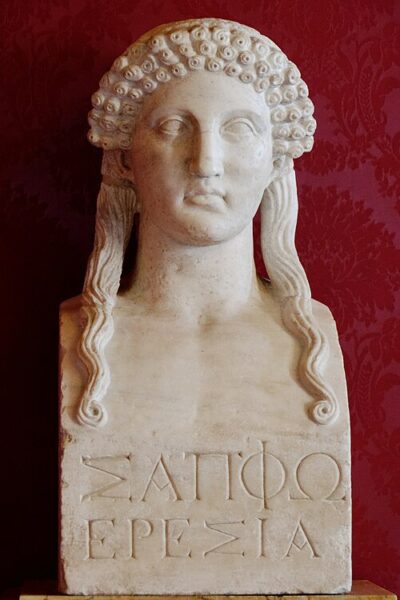
Ode to Aphrodite
Ode to Aphrodite is the only surviving poem by Sappho which is known to be complete.
- Published
- 6th century BC
- Written by
- Sappho
- Genre
- religious hymn
- Country of origin
- Ancient Greece
All 7 facts, and where they come from
Facts
7 facts · 0 confirmed by two sources · 0 cited · 7 from one source
Where this comes from
Papalocal keeps its own record. It started from these sources; what each one said is kept here as it was copied, so a change on their side never changes this page by itself. Tap one to read its version.
What Wikidata says · copied November 17, 2026 · revision 2356731141
- Described as
- the only surviving poem by Sappho which is known to be complete
- Other names
- Ode to Venus, Sappho fr. 1, Hymn to Aphrodite, Hymn to Venus, Sappho 1
- What it is
- literary work
- Written by
- Sappho
- Genre
- religious hymn; monodic lyric
- Published
- 6th century BC
- Language
- Aeolic Greek
- Country of origin
- Ancient Greece · 1 reference
- Wikipedias with a page
- 15
Wikidata item Q21070481 (wikidata.org/wiki/Q21070481), public domain (CC0). Copied 2026-11-17.
What Wikipedia says · copied November 17, 2026 · revision 1375758076
The Ode to Aphrodite (or Sappho fragment 1) is a lyric poem by the archaic Greek poet Sappho, who wrote in the late seventh and early sixth centuries BCE, in which the speaker calls on the help of Aphrodite in the pursuit of a beloved. The poem survives in almost complete form, with only two places of uncertainty in the text, preserved through a quotation from Dionysius of Halicarnassus' treatise On Composition and in fragmentary form in a scrap of papyrus discovered at Oxyrhynchus in Egypt.
The Ode to Aphrodite comprises seven Sapphic stanzas. It begins with an invocation of the goddess Aphrodite, which is followed by a narrative section in which the speaker describes a previous occasion on which the goddess has helped her. The poem ends with an appeal to Aphrodite to once again come to the speaker's aid. The seriousness with which Sappho intended the poem is disputed, though at least parts of the work appear to be intentionally humorous. The poem makes use of Homeric language, and alludes to episodes from the Iliad.
From the Wikipedia article “Ode to Aphrodite” (en.wikipedia.org/wiki/Ode_to_Aphrodite), by its contributors, under CC BY-SA 4.0 (creativecommons.org/licenses/by-sa/4.0/). Copied 2026-11-17; not changed.
Confirmed Two sources agree. Cited One source, and it names where it got it. One source One source, without a reference of its own. Sources disagree The sources disagree. We show the best-supported value and keep theirs below.
Picture: Wikimedia Commons: P.Oxy.v0021.n2288.jpg · See Commons file page