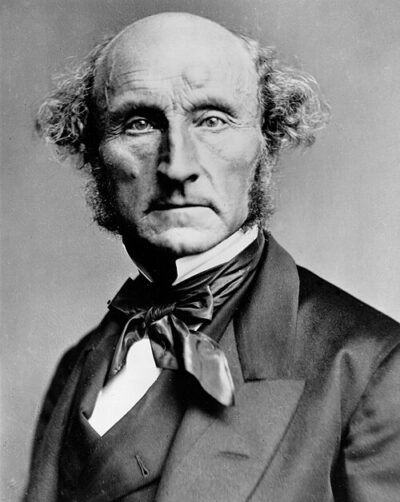
On Liberty
On Liberty is a non-fiction work by John Stuart Mill. It came out in 1859.
- Published
- 1859
- Written by
- John Stuart Mill
- Genre
- non-fiction
- Country of origin
- United Kingdom of Great Britain and Ireland
All 6 facts, and where they come from
Facts
6 facts · 0 confirmed by two sources · 0 cited · 6 from one source
Where this comes from
Papalocal keeps its own record. It started from these sources; what each one said is kept here as it was copied, so a change on their side never changes this page by itself. Tap one to read its version.
What Wikidata says · copied November 17, 2026 · revision 2551340336
- Described as
- non-fiction work by John Stuart Mill
- What it is
- written work
- Written by
- John Stuart Mill
- Genre
- non-fiction
- Published
- 1859
- Language
- British English
- Country of origin
- United Kingdom of Great Britain and Ireland
- Wikipedias with a page
- 38
Wikidata item Q1055881 (wikidata.org/wiki/Q1055881), public domain (CC0). Copied 2026-11-17.
What Wikipedia says · copied November 17, 2026 · revision 1384231887
On Liberty is an essay written by the English philosophers Harriet Taylor Mill and John Stuart Mill and published in 1859 under the latter's name. It applied their ethical system of utilitarianism to society and state. The Mills suggested standards for the relationship between authority and liberty. They emphasized the importance of individuality, which they considered a prerequisite to the higher pleasures—the summum bonum of utilitarianism. Furthermore, the Mills asserted that democratic ideals may result in the tyranny of the majority. Among the standards proposed are the Mills' three basic liberties of individuals, their three legitimate objections to government intervention, and their two maxims regarding the relationship of the individual to society.
On Liberty was a greatly influential and well-received work. Some classical liberals and libertarians have criticized it for its apparent discontinuity with Utilitarianism, and vagueness in defining the arena within which individuals can contest government infringements on their personal freedom of action. The ideas presented in On Liberty have remained the basis of much political thought. It has remained in print since its initial publication.
From the Wikipedia article “On Liberty” (en.wikipedia.org/wiki/On_Liberty), by its contributors, under CC BY-SA 4.0 (creativecommons.org/licenses/by-sa/4.0/). Copied 2026-11-17; not changed.
Confirmed Two sources agree. Cited One source, and it names where it got it. One source One source, without a reference of its own. Sources disagree The sources disagree. We show the best-supported value and keep theirs below.
Picture: Wikimedia Commons: On Liberty (first edition title page via facsimile).jpg · See Commons file page