optical aberration
Optical aberration is a phenomenon in astronomy.
All 1 facts, and where they come from
Facts
1 facts · 0 confirmed by two sources · 0 cited · 1 from one source
Where this comes from
Papalocal keeps its own record. It started from these sources; what each one said is kept here as it was copied, so a change on their side never changes this page by itself. Tap one to read its version.
What Wikidata says · copied November 17, 2026 · revision 2564811895
- Described as
- phenomenon in astronomy
- Other names
- velocity aberration, astronomical aberration
- What it is
- scientific theory
- Wikipedias with a page
- 46
Wikidata item Q211728 (wikidata.org/wiki/Q211728), public domain (CC0). Copied 2026-11-17.
What Wikipedia says · copied November 17, 2026 · revision 1380017575
In astronomy, aberration (also referred to as astronomical aberration, stellar aberration, or velocity aberration) is a phenomenon where celestial objects exhibit an apparent motion about their true positions based on the velocity of the observer: It causes objects to appear to be displaced towards the observer's direction of motion. The change in angle is of the order of v/c where c is the speed of light and v the velocity of the observer. In the case of "stellar" or "annual" aberration, the apparent position of a star to an observer on Earth varies periodically over the course of a year as the Earth's velocity changes as it revolves around the Sun, by a maximum angle of approximately 20 arcseconds in right ascension or declination.
The term aberration has historically been used to refer to a number of related phenomena concerning the propagation of light in moving bodies.
Aberration is distinct from parallax, which is a change in the apparent position of a relatively nearby object, as measured by a moving observer, relative to more distant objects that define a reference frame. The amount of parallax depends on the distance of the object from the observer, whereas aberration does not. Aberration is also related to light-time correction and relativistic beaming, although it is often considered separately from these effects.
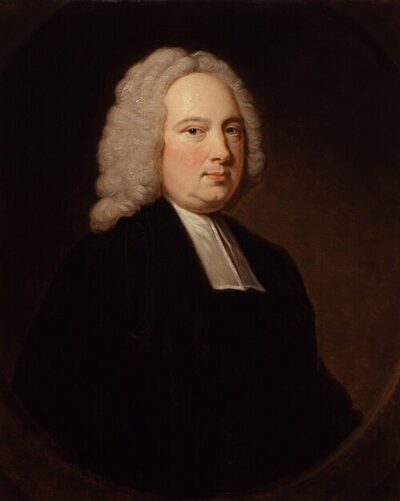
Aberration is historically significant because of its role in the development of the theories of light, electromagnetism and, ultimately, the theory of special relativity. It was first observed in the late 1600s by astronomers searching for stellar parallax in order to confirm the heliocentric model of the Solar System. However, it was not understood at the time to be a different phenomenon. In the 1720s Italian astronomer Eustachio Manfredi carried out several observations of the phenomenon. He was one of the first to realize that aberration was not the effect of parallax, but he still interpreted it within a geocentric framework. It was Manfredi who coined the term aberration. In 1727, James Bradley provided a classical explanation for it in terms of the finite speed of light relative to the motion of the Earth in its orbit around the Sun, which he used to make one of the earliest measurements of the speed of light. However, initially Bradley's theory was incompatible with 19th-century theories of light, and aberration became a major motivation for the aether drag theories of Augustin Fresnel (in 1818) and G. G. Stokes (in 1845), and for Hendrik Lorentz's aether theory of electromagnetism in 1892. The aberration of light, together with Lorentz's elaboration of Maxwell's electrodynamics, the moving magnet and conductor problem, the negative aether drift experiments, as well as the Fizeau experiment, led Albert Einstein to develop the theory of special relativity in 1905, which presents a general form of the equation for aberration in terms of such theory. However the results of the Michelson Morley experiment were misunderstood at the time and since then it has been realised that their experiment did not rule out an aether medium for a wave only model of light. But rather showed only that the aether, now referred to as the vacuum, did not impede or deflect the direction or velocity of light in the source frame. Ruling out the necessity to invoke a relativistic explanation of aberration.
From the Wikipedia article “Aberration (astronomy)” (en.wikipedia.org/wiki/Aberration_(astronomy)), by its contributors, under CC BY-SA 4.0 (creativecommons.org/licenses/by-sa/4.0/). Copied 2026-11-17; not changed.
Confirmed Two sources agree. Cited One source, and it names where it got it. One source One source, without a reference of its own. Sources disagree The sources disagree. We show the best-supported value and keep theirs below.