
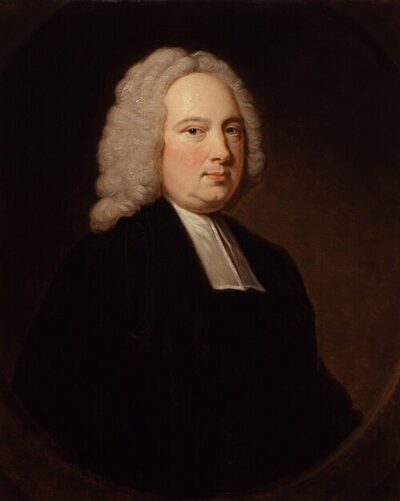
James Bradley
James Bradley was an English astronomer; Astronomer Royal. Born March 1693, in Sherborne. Died July 13, 1762, in Chalford. Positions held include Astronomer Royal (1742–1762) and Savilian Professor of Astronomy (1721–1762). Known for optical aberration and nutation. Educated at Balliol College and University of Oxford. Awards include Copley Medal and Fellow of the Royal Society.
Facts
24 facts · 1 confirmed by two sources · 12 cited · 10 from one source · 1 where the sources disagree
What’s different
- Born: we show March 1693 (Sources disagree). Wikipedia says September 1692
Where this comes from
Papalocal keeps its own record. It started from these sources; what each one said is kept here as it was copied, so a change on their side never changes this page by itself. Tap one to read its version.
What Wikidata says · copied November 16, 2026 · revision 2564329720
- Described as
- English astronomer; Astronomer Royal
- Other names
- James Bradley FRS
- Born
- March 1693 · 4 references
- Died
- July 13, 1762 · 4 references
- Born in
- Sherborne · 3 references
- Died in
- Chalford · 3 references
- Buried in
- Church of the Holy Trinity · 1 reference
- Citizen of
- Kingdom of Great Britain
- Occupation
- astronomer · 1 reference; university teacher
- Positions held
- Astronomer Royal (1742–1762) · 1 reference; Savilian Professor of Astronomy (1721–1762) · 1 reference
- Worked for
- University of Oxford (1721–1762) · 1 reference; Church of England (1719–1721) · 1 reference
- Education
- Balliol College (1710–1714) · 1 reference; University of Oxford (1714–1717) · 2 references
- Member of
- Royal Society of London (1718–) · 1 reference; Royal Swedish Academy of Sciences; Russian Academy of Sciences; Royal Prussian Academy of Sciences
- Known for
- optical aberration; nutation
- Awards
- Copley Medal (1748) · 2 references; Fellow of the Royal Society (1718) · 1 reference
- Field
- astronomy
- Religion
- Anglicanism
- Wikipedias with a page
- 52
Wikidata item Q312278 (wikidata.org/wiki/Q312278), public domain (CC0). Copied November 16, 2026.
What Wikipedia says · copied November 16, 2026 · revision 1372234100
James Bradley (September 1692 – 13 July 1762) was an English astronomer and priest who served as the third Astronomer Royal from 1742. He is best known for two fundamental discoveries in astronomy, the aberration of light (1725–1728), and the nutation of the Earth's axis (1728–1748).
These two discoveries were called "the most brilliant and useful of the century" by Jean Baptiste Joseph Delambre, historian of astronomy, mathematical astronomer and director of the Paris Observatory. In his History of astronomy in the 18th century (1821), Delambre stated:"It is to these two discoveries by Bradley that we owe the exactness of modern astronomy. ... This double service assures to their discoverer the most distinguished place (after Hipparchus and Kepler) above the greatest astronomers of all ages and all countries."
- Born, in its opening lines
- September 1692
- Died, in its opening lines
- July 13, 1762
From the Wikipedia article “James Bradley” (en.wikipedia.org/wiki/James_Bradley), by its contributors, under CC BY-SA 4.0 (creativecommons.org/licenses/by-sa/4.0/). Copied November 16, 2026; not changed.
Confirmed Two sources agree. Cited One source, and it names where it got it. One source One source, without a reference of its own. Sources disagree The sources disagree. We show the best-supported value and keep theirs below.
