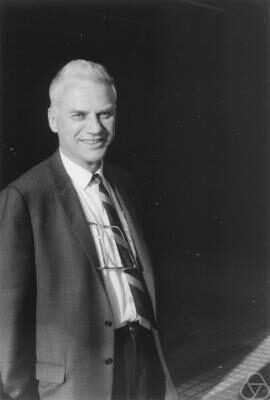
optional stopping theorem
Optional stopping theorem is martingale's expected value at a stopping time equals its initial expected value.
All 2 facts, and where they come from
Facts
2 facts · 0 confirmed by two sources · 0 cited · 2 from one source
Where this comes from
Papalocal keeps its own record. It started from these sources; what each one said is kept here as it was copied, so a change on their side never changes this page by itself. Tap one to read its version.
What Wikidata says · copied November 19, 2026 · revision 2512708126
- Described as
- martingale's expected value at a stopping time equals its initial expected value
- What it is
- theorem
- Named after
- Joseph Leo Doob
- Wikipedias with a page
- 9
Wikidata item Q2027347 (wikidata.org/wiki/Q2027347), public domain (CC0). Copied 2026-11-19.
What Wikipedia says · copied November 19, 2026 · revision 1350459868
In probability theory, the optional stopping theorem (or sometimes Doob's optional sampling theorem, for American probabilist Joseph Doob) says that, under certain conditions, the expected value of a martingale at a stopping time is equal to its initial expected value.
The concept can be understood through the following key principles:Since martingales can be used to model the wealth of a gambler participating in a fair game, the optional stopping theorem implies that, on average, nothing can be gained by stopping play based on the information obtainable so far (i.e., without looking into the future).
Certain conditions are necessary for this result to hold true. In particular, the theorem applies to doubling strategies and illustrates mathematically why such strategies cannot guarantee a profit with finite resources.
The optional stopping theorem is an important tool of mathematical finance in the context of the fundamental theorem of asset pricing, helping to evaluate the expected returns of various pricing models.
From the Wikipedia article “Optional stopping theorem” (en.wikipedia.org/wiki/Optional_stopping_theorem), by its contributors, under CC BY-SA 4.0 (creativecommons.org/licenses/by-sa/4.0/). Copied 2026-11-19; not changed.
Confirmed Two sources agree. Cited One source, and it names where it got it. One source One source, without a reference of its own. Sources disagree The sources disagree. We show the best-supported value and keep theirs below.