

Order of Olga
Order of Olga is a Württemberg distinction (1871).
- Country
- Kingdom of Württemberg
- Created
- June 27, 1871
All 4 facts, and where they come from
Facts
4 facts · 0 confirmed by two sources · 0 cited · 4 from one source
Where this comes from
Papalocal keeps its own record. It started from these sources; what each one said is kept here as it was copied, so a change on their side never changes this page by itself. Tap one to read its version.
What Wikidata says · copied November 17, 2026 · revision 2568872250
- Described as
- Württemberg distinction (1871)
- What it is
- order
- Created
- June 27, 1871
- Country
- Kingdom of Württemberg
- Named after
- Olga Nikolaevna of Russia
- Wikipedias with a page
- 13
Wikidata item Q551034 (wikidata.org/wiki/Q551034), public domain (CC0). Copied 2026-11-17.
What Wikipedia says · copied November 17, 2026 · revision 1341514454
The Order of Olga (Württemberg) (German: Olga-Orden) was created by Karl I, King of Württemberg, on 27 June 1871, to honor his queen consort, Grand Duchess Olga Nikolaevna of Russia. Its primary purpose was to honor women who cared for wounded soldiers in the Franco-Prussian War of 1870 – 1871. While it was conferred on a few men, it remained largely a women's order.
The insignia was a cross of silver with the interlocking cipher of the King Karl and Queen Olga on the obverse and the years 1870-71 on the reverse. This emblem was suspended from a red and black ribbon. Men, including the king, wore it from the buttonhole of his coat or as a military medal, while ladies wore it suspended form a large bow on their left breast.
In 1889, a similar medal was created – the Karl Olga Medal – for service to the Red Cross. This decoration was, incidentally, also given primarily to women, but was not part of the Order of Olga.
From the Wikipedia article “Order of Olga” (en.wikipedia.org/wiki/Order_of_Olga), by its contributors, under CC BY-SA 4.0 (creativecommons.org/licenses/by-sa/4.0/). Copied 2026-11-17; not changed.
Confirmed Two sources agree. Cited One source, and it names where it got it. One source One source, without a reference of its own. Sources disagree The sources disagree. We show the best-supported value and keep theirs below.
Picture: Wikimedia Commons: Olgaorden Württemberg.jpg · See Commons file page
People connected 4
Won it
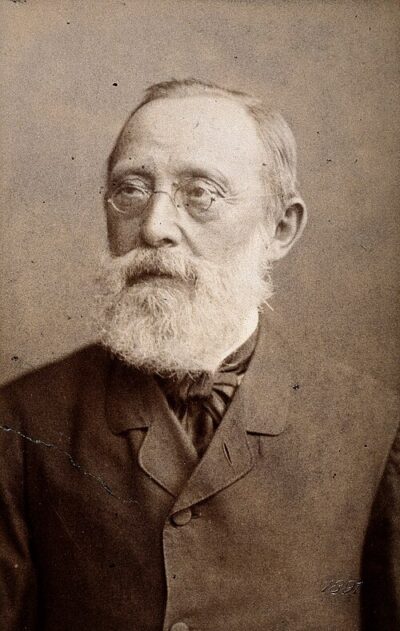 Rudolf Virchow (1872)German doctor, anthropologist, public health activist, pathologist, prehistorian, biologist and politician (1821-1902)
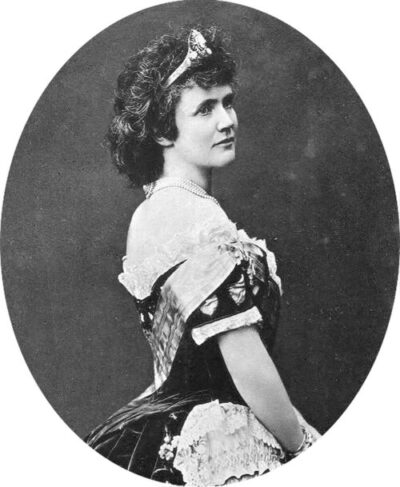 Elisabeth of WiedGerman writer; queen consort of Romania as the wife of King Carol I (1843–1916)
 Karl I of WürttembergThird King of Württemberg (1864–1891)
 Princess Louise of PrussiaPrussian princess (1838-1923)
