Ordo Virtutum
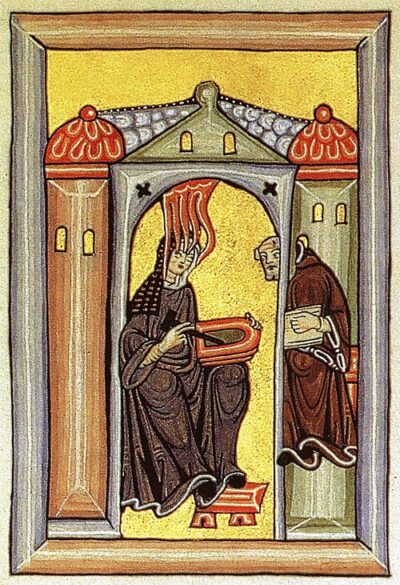
Ordo Virtutum is an early medieval liturgical music drama by Hildegard of Bingen. It came out in 1151.
- Released
- 1151
- Genre
- liturgical drama
All 6 facts, and where they come from
Facts
6 facts · 0 confirmed by two sources · 0 cited · 6 from one source
Where this comes from
Papalocal keeps its own record. It started from these sources; what each one said is kept here as it was copied, so a change on their side never changes this page by itself. Tap one to read its version.
What Wikidata says · copied November 17, 2026 · revision 2570165527
- Described as
- early medieval liturgical music drama by Hildegard of Bingen
- What it is
- musical work/composition; literary work
- Music by
- Hildegard of Bingen
- Genre
- liturgical drama
- Released
- 1151
- Language
- medieval Latin
- Wikipedias with a page
- 7
Wikidata item Q4353821 (wikidata.org/wiki/Q4353821), public domain (CC0). Copied 2026-11-17.
What Wikipedia says · copied November 17, 2026 · revision 1384899954
Ordo Virtutum (Latin for Order of the Virtues) is an allegorical morality play, or sacred music drama, by Hildegard of Bingen, composed around 1151, during the construction and relocation of her Abbey at Rupertsberg. It is the earliest morality play by more than a century, and the only medieval musical drama to survive with an attribution for both text and music.
A short version of Ordo Virtutum without music appears at the end of Scivias, Hildegard's most famous account of her visions. It is also included in some manuscripts of the Symphonia armoniae celestium revelationum ("Symphony of the Harmony of Celestial Revelations"), a cycle of more than 70 liturgical songs. It may have been performed by the convent nuns at the dedication of the St. Rupertsberg church in 1152 or possibly before the Mass for the Consecration of Virgins at the convent.
From the Wikipedia article “Ordo Virtutum” (en.wikipedia.org/wiki/Ordo_Virtutum), by its contributors, under CC BY-SA 4.0 (creativecommons.org/licenses/by-sa/4.0/). Copied 2026-11-17; not changed.
Confirmed Two sources agree. Cited One source, and it names where it got it. One source One source, without a reference of its own. Sources disagree The sources disagree. We show the best-supported value and keep theirs below.