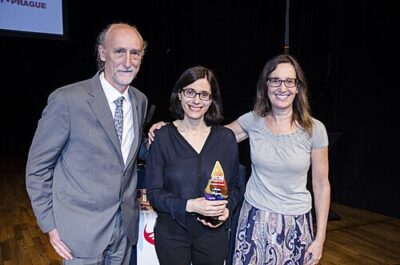
Overton Prize
Overton Prize is a computational biology prize. It was created in 2001. It is given by International Society for Computational Biology.
- Given by
- International Society for Computational Biology
- Created
- 2001
All 5 facts, and where they come from
Facts
5 facts · 0 confirmed by two sources · 0 cited · 5 from one source
Where this comes from
Papalocal keeps its own record. It started from these sources; what each one said is kept here as it was copied, so a change on their side never changes this page by itself. Tap one to read its version.
What Wikidata says · copied November 17, 2026 · revision 2503783995
- Described as
- computational biology prize
- Other names
- ISCB Overton Prize
- What it is
- science award
- Created
- 2001
- Given by
- International Society for Computational Biology
- Named after
- G. Christian Overton
- Official website
- https://www.iscb.org/about-iscb/awards-and-competitions
- Wikipedias with a page
- 4
Wikidata item Q7114033 (wikidata.org/wiki/Q7114033), public domain (CC0). Copied 2026-11-17.
What Wikipedia says · copied November 17, 2026 · revision 1386205861
The ISCB Overton Prize is a computational biology prize awarded annually for outstanding accomplishment by a scientist in the early to mid stage of their career. Laureates have made significant contribution to the field of computational biology either through research, education, service, or a combination of the three.
The prize was established by the International Society for Computational Biology (ISCB) in memory of G. Christian Overton a major contributor to the field of bioinformatics and member of the ISCB Board of Directors who died unexpectedly in 2000.
The Overton Prize is traditionally awarded at the Intelligent Systems for Molecular Biology (ISMB) conference.
From the Wikipedia article “Overton Prize” (en.wikipedia.org/wiki/Overton_Prize), by its contributors, under CC BY-SA 4.0 (creativecommons.org/licenses/by-sa/4.0/). Copied 2026-11-17; not changed.
Confirmed Two sources agree. Cited One source, and it names where it got it. One source One source, without a reference of its own. Sources disagree The sources disagree. We show the best-supported value and keep theirs below.