Paley–Wiener theorem
Paley–Wiener theorem is an any of a family of theorems relating decay properties of a function or distribution at infinity with analyticity of its Fourier transform.
All 3 facts, and where they come from
Facts
3 facts · 0 confirmed by two sources · 0 cited · 3 from one source
Where this comes from
Papalocal keeps its own record. It started from these sources; what each one said is kept here as it was copied, so a change on their side never changes this page by itself. Tap one to read its version.
What Wikidata says · copied November 16, 2026 · revision 2426836306
- Described as
- any of a family of theorems relating decay properties of a function or distribution at infinity with analyticity of its Fourier transform
- What it is
- theorem
- Named after
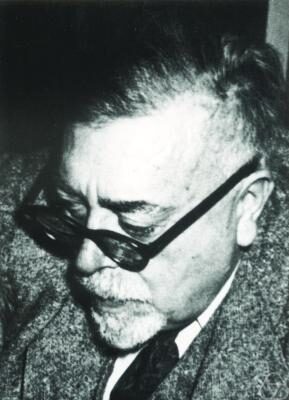
- Raymond Paley; Norbert Wiener
- Wikipedias with a page
- 8
Wikidata item Q1119094 (wikidata.org/wiki/Q1119094), public domain (CC0). Copied 2026-11-16.
What Wikipedia says · copied November 16, 2026 · revision 1378942957
In mathematics, a Paley–Wiener theorem is a theorem that relates decay properties of a function or distribution at infinity with analyticity of its Fourier transform. It is named after Raymond Paley (1907–1933) and Norbert Wiener (1894–1964) who, in 1934, introduced various versions of the theorem. The original theorems did not use the language of distributions, and instead applied to square-integrable functions. The first such theorem using distributions was due to Laurent Schwartz. These theorems heavily rely on the triangle inequality (to interchange the absolute value and integration).
The original work by Paley and Wiener is also used as a namesake in the fields of control theory and harmonic analysis; introducing the Paley–Wiener condition for spectral factorization and the Paley–Wiener criterion for non-harmonic Fourier series respectively. These are related mathematical concepts that place the decay properties of a function in context of stability problems.
From the Wikipedia article “Paley–Wiener theorem” (en.wikipedia.org/wiki/Paley–Wiener_theorem), by its contributors, under CC BY-SA 4.0 (creativecommons.org/licenses/by-sa/4.0/). Copied 2026-11-16; not changed.
Confirmed Two sources agree. Cited One source, and it names where it got it. One source One source, without a reference of its own. Sources disagree The sources disagree. We show the best-supported value and keep theirs below.