Parerga and Paralipomena
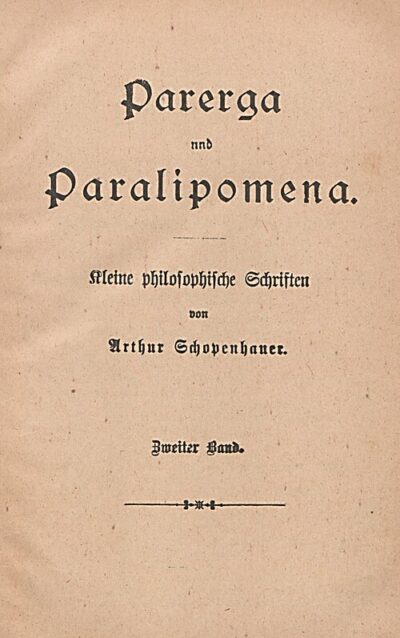
Parerga and Paralipomena is a collection of philosophical reflections by Arthur Schopenhauer published in 1851.
- Published
- 1851
- Written by
- Arthur Schopenhauer
- Genre
- essay
All 5 facts, and where they come from
Facts
5 facts · 0 confirmed by two sources · 0 cited · 5 from one source
Where this comes from
Papalocal keeps its own record. It started from these sources; what each one said is kept here as it was copied, so a change on their side never changes this page by itself. Tap one to read its version.
What Wikidata says · copied November 17, 2026 · revision 2503827194
- Described as
- collection of philosophical reflections by Arthur Schopenhauer published in 1851
- What it is
- written work
- Written by
- Arthur Schopenhauer
- Genre
- essay · 1 reference
- Published
- 1851
- Language
- German · 1 reference
- Wikipedias with a page
- 14
Wikidata item Q929229 (wikidata.org/wiki/Q929229), public domain (CC0). Copied 2026-11-17.
What Wikipedia says · copied November 17, 2026 · revision 1381413516
Parerga and Paralipomena (Greek for "Appendices" and "Omissions", respectively; German: Parerga und Paralipomena) is a collection of philosophical reflections by Arthur Schopenhauer published in 1851. The selection was compiled not as a summation of or introduction to Schopenhauer's philosophy, but as augmentary readings for those who had already embraced it, although the author maintained it would be comprehensible and of interest to the uninitiated nevertheless. The collection is divided into two volumes, covering first the parerga and thereafter the paralipomena to that philosophy. The parerga are six extended essays intended as supplementary to the author's thought. The paralipomena, shorter elaborations divided by topic into thirty-one subheadings, cover material hitherto unaddressed by the philosopher but deemed by him to be complementary to the parerga.
From the Wikipedia article “Parerga and Paralipomena” (en.wikipedia.org/wiki/Parerga_and_Paralipomena), by its contributors, under CC BY-SA 4.0 (creativecommons.org/licenses/by-sa/4.0/). Copied 2026-11-17; not changed.
Confirmed Two sources agree. Cited One source, and it names where it got it. One source One source, without a reference of its own. Sources disagree The sources disagree. We show the best-supported value and keep theirs below.
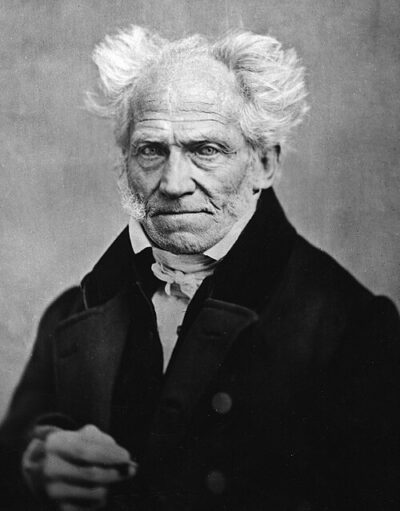
Picture: Arthur Schopenhauer, via Wikimedia Commons · Public domain