Pauli exclusion principle
Pauli exclusion principle is a quantum mechanical principle that two identical fermions cannot occupy the same quantum state simultaneously.
All 2 facts, and where they come from
Facts
2 facts · 0 confirmed by two sources · 0 cited · 2 from one source
Where this comes from
Papalocal keeps its own record. It started from these sources; what each one said is kept here as it was copied, so a change on their side never changes this page by itself. Tap one to read its version.
What Wikidata says · copied November 16, 2026 · revision 2515841055
- Described as
- quantum mechanical principle that two identical fermions cannot occupy the same quantum state simultaneously
- Other names
- exclusion principle (physics), principle of exclusion (quantum mechanics), exclusion principle (Fermi-Dirac statistics), Pauli principle
- What it is
- educational theory
- Named after
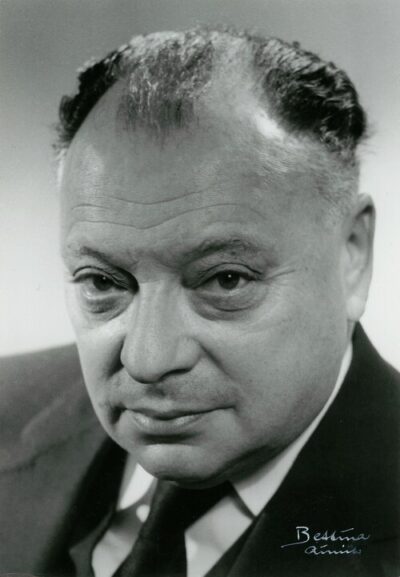
- Wolfgang Pauli
- Wikipedias with a page
- 72
Wikidata item Q131594 (wikidata.org/wiki/Q131594), public domain (CC0). Copied 2026-11-16.
What Wikipedia says · copied November 16, 2026 · revision 1382973721
In quantum mechanics, the Pauli exclusion principle states that two or more identical particles with half-integer spins (i.e., fermions) cannot simultaneously occupy the same quantum state. This principle was formulated by Austrian physicist Wolfgang Pauli in 1925 for electrons, and later extended to all fermions with his spin–statistics theorem of 1940.
In the case of electrons in atoms, the exclusion principle can be stated as follows: in a poly-electron atom it is impossible for any two electrons to have the same two values of all four of their quantum numbers, which are: n, the principal quantum number; ℓ, the azimuthal quantum number; mℓ, the magnetic quantum number; and ms, the spin quantum number. For example, if two electrons reside in the same orbital, then their values of n, ℓ, and mℓ are equal. In that case, the two values of ms (spin) pair must be different. Since the only two possible values for the spin projection ms are +1/2 and −1/2, it follows that one electron must have ms = +1/2 and one ms = −1/2.
Particles with an integer spin (bosons) are not subject to the Pauli exclusion principle. Any number of identical bosons can occupy the same quantum state, such as photons produced by a laser, or atoms found in a Bose–Einstein condensate.
A rigorous statement which justifies the exclusion principle is: under the exchange of two identical particles, the total (many-particle) wave function is antisymmetric for fermions and symmetric for bosons. This means that if the space and spin coordinates of two identical particles are interchanged, then the total wave function changes sign (from positive to negative or vice versa) for fermions, but does not change sign for bosons. So, if hypothetically two fermions were in the same state—for example, in the same atom in the same orbital with the same spin—then interchanging them would change nothing and the total wave function would be unchanged. However, the only way a total wave function can both change sign (which is required for fermions), and also remain unchanged, is that such a function must be zero everywhere, which means such a state cannot exist. This reasoning does not apply to bosons because the sign does not change.
From the Wikipedia article “Pauli exclusion principle” (en.wikipedia.org/wiki/Pauli_exclusion_principle), by its contributors, under CC BY-SA 4.0 (creativecommons.org/licenses/by-sa/4.0/). Copied 2026-11-16; not changed.
Confirmed Two sources agree. Cited One source, and it names where it got it. One source One source, without a reference of its own. Sources disagree The sources disagree. We show the best-supported value and keep theirs below.