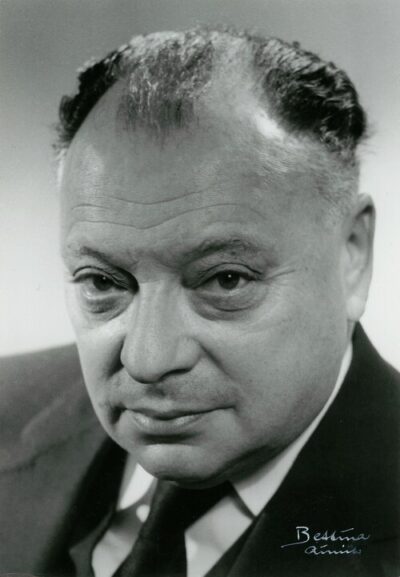
Pauli–Lubanski pseudovector
Pauli–Lubanski pseudovector is an exterior product of relativistic momentum and relativistic angular momentum.
All 3 facts, and where they come from
Facts
3 facts · 0 confirmed by two sources · 0 cited · 3 from one source
Where this comes from
Papalocal keeps its own record. It started from these sources; what each one said is kept here as it was copied, so a change on their side never changes this page by itself. Tap one to read its version.
What Wikidata says · copied November 16, 2026 · revision 2448353237
- Described as
- exterior product of relativistic momentum and relativistic angular momentum
- Other names
- Pauli–Lubanski vector, Pauli–Lubański pseudovector, Pauli–Lubański vector
- What it is
- mathematical concept
- Named after
- Wolfgang Pauli; Józef Lubański
- Wikipedias with a page
- 4
Wikidata item Q13596609 (wikidata.org/wiki/Q13596609), public domain (CC0). Copied 2026-11-16.
What Wikipedia says · copied November 16, 2026 · revision 1376294204
In physics, the Pauli–Lubański pseudovector is an operator defined from the momentum and angular momentum, used in the quantum-relativistic description of angular momentum. It is named after Wolfgang Pauli and Józef Lubański.
It describes the spin states of moving particles. It is the generator of the little group of the Poincaré group, that is the maximal subgroup (with four generators) leaving the eigenvalues of the four-momentum vector Pμ invariant.
From the Wikipedia article “Pauli–Lubanski pseudovector” (en.wikipedia.org/wiki/Pauli–Lubanski_pseudovector), by its contributors, under CC BY-SA 4.0 (creativecommons.org/licenses/by-sa/4.0/). Copied 2026-11-16; not changed.
Confirmed Two sources agree. Cited One source, and it names where it got it. One source One source, without a reference of its own. Sources disagree The sources disagree. We show the best-supported value and keep theirs below.