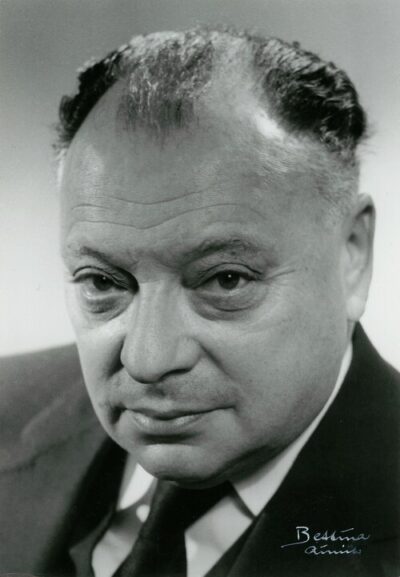
Pauli–Villars regularization
Pauli–Villars regularization is an in quantum field theory, a regularization method by means of inserting a fictitious particle with very high mass.
All 3 facts, and where they come from
Facts
3 facts · 0 confirmed by two sources · 0 cited · 3 from one source
Where this comes from
Papalocal keeps its own record. It started from these sources; what each one said is kept here as it was copied, so a change on their side never changes this page by itself. Tap one to read its version.
What Wikidata says · copied November 16, 2026 · revision 2025586286
- Described as
- in quantum field theory, a regularization method by means of inserting a fictitious particle with very high mass
- Other names
- PV, P–V
- What it is
- scientific theory
- Named after
- Wolfgang Pauli; Felix Villars
- Wikipedias with a page
- 3
Wikidata item Q7155157 (wikidata.org/wiki/Q7155157), public domain (CC0). Copied 2026-11-16.
What Wikipedia says · copied November 16, 2026 · revision 1322980450
In theoretical physics, Pauli–Villars regularization (P–V) is a procedure that isolates divergent terms from finite parts in loop calculations in field theory in order to renormalize the theory. Wolfgang Pauli and Felix Villars published the method in 1949, based on earlier work by Richard Feynman, Ernst Stueckelberg and Dominique Rivier.
In this treatment, a divergence arising from a loop integral (such as vacuum polarization or electron self-energy) is modulated by a spectrum of auxiliary particles added to the Lagrangian or propagator. When the masses of the fictitious particles are taken as an infinite limit (i.e., once the regulator is removed) one expects to recover the original theory.
This regulator is gauge invariant in an abelian theory due to the auxiliary particles being minimally coupled to the photon field through the gauge covariant derivative. It is not gauge covariant in a non-abelian theory, though, so Pauli–Villars regularization is more difficult to use in QCD calculations. P–V serves as a helpful alternative to the more commonly used dimensional regularization in specific circumstances, such as in chiral phenomena, where a change of dimension alters the properties of the Dirac gamma matrices.
Gerard 't Hooft and Martinus J. G. Veltman invented, in addition to dimensional regularization, the method of unitary regulators, which is a Lagrangian-based Pauli–Villars method with a discrete spectrum of auxiliary masses, using the path-integral formalism.
From the Wikipedia article “Pauli–Villars regularization” (en.wikipedia.org/wiki/Pauli–Villars_regularization), by its contributors, under CC BY-SA 4.0 (creativecommons.org/licenses/by-sa/4.0/). Copied 2026-11-16; not changed.
Confirmed Two sources agree. Cited One source, and it names where it got it. One source One source, without a reference of its own. Sources disagree The sources disagree. We show the best-supported value and keep theirs below.