People's Party for Reconstruction and Democracy
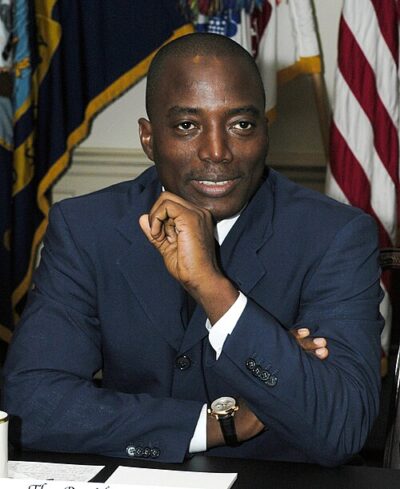
People's Party for Reconstruction and Democracy is a political party of the Democratic Republic of the Congo. It was founded in 2002 by Joseph Kabila. Its headquarters are in Gombe. It stands for social democracy.
- Founded
- 2002
- Ideology
- social democracy
- Chair
- Évariste Boshab
All 8 facts, and where they come from
Facts
8 facts · 0 confirmed by two sources · 0 cited · 8 from one source
Where this comes from
Papalocal keeps its own record. It started from these sources; what each one said is kept here as it was copied, so a change on their side never changes this page by itself. Tap one to read its version.
What Wikidata says · copied November 17, 2026 · revision 2515899481
- Described as
- political party of the Democratic Republic of the Congo
- What it is
- political party
- Founded
- 2002
- Founded by
- Joseph Kabila · 1 reference
- Headquarters
- Gombe
- Country
- Democratic Republic of the Congo
- Chair
- Évariste Boshab
- Ideology
- social democracy
- Official website
- http://www.pprd-rdc.net/
- Wikipedias with a page
- 15
Wikidata item Q1235589 (wikidata.org/wiki/Q1235589), public domain (CC0). Copied 2026-11-17.
What Wikipedia says · copied November 17, 2026 · revision 1364922480
The People's Party for Reconstruction and Democracy (French: Parti du Peuple pour la Reconstruction et la Démocratie or PPRD) is a political party in the Democratic Republic of the Congo. It is the political structure established by the former president of the country, Joseph Kabila.
In the 2006 general election, the PPRD won 111 out of 500 seats in the lower house of parliament and became the largest party in parliament. The 2006 general election was the first free election since the 1960s. On 27 November 2006, the presidential candidate supported by the PPRD, Joseph Kabila, was declared the winner of the 2006 Presidential elections, by the Supreme Court of Justice.
In the 19 January 2007 Senate elections, the party won 22 out of 108 seats.
In the 2011 general election, the PPRD lost nearly half of its seats in the lower house of parliament, dropping to 63 out of 500 seats. Nevertheless, the PPRD retained its position as the largest party in parliament.
The party was the leading component of the Alliance of the Presidential Majority, which was the majority bloc in the National Assembly during the presidency of Joseph Kabila.
The party, and its coalition, the Common Front for Congo (FCC) chose not partake in the electoral process in the 2023 elections, citing unmet demands such as representation of the FCC within CENI, an independent, balanced constitutional court, a consensual electoral law that guarantees greater transparency, security for opposition members, and the restoration of security in the eastern part of the DRC as well as in the province of Mai-Ndombe. Kabila has since left the country for his doctoral project as well as for security reasons, only returning if given security guarantees.
In March 2025, Kabila began a comprehensive reorganization and professionalization of the PPRD, targeting the 2028 general elections. Aubin Minaku, vice-president of the PPRD, is currently serving as interim president. In April 2025, the Congolese government suspended the party, citing Kabila's "overt" activism following his visit to the M23-held city of Goma. On 16 December 2025, the PPRD permanent secretary Emmanuel Ramazani Shadary was arrested, and the headquarters of the FCC in Kinshasa was visited by military personnel.
From the Wikipedia article “People's Party for Reconstruction and Democracy” (en.wikipedia.org/wiki/People's_Party_for_Reconstruction_and_Democracy), by its contributors, under CC BY-SA 4.0 (creativecommons.org/licenses/by-sa/4.0/). Copied 2026-11-17; not changed.
Confirmed Two sources agree. Cited One source, and it names where it got it. One source One source, without a reference of its own. Sources disagree The sources disagree. We show the best-supported value and keep theirs below.