phonograph
Phonograph is a device for the analogue recording and playback of sound.
All 1 facts, and where they come from
Facts
1 facts · 0 confirmed by two sources · 0 cited · 1 from one source
Where this comes from
Papalocal keeps its own record. It started from these sources; what each one said is kept here as it was copied, so a change on their side never changes this page by itself. Tap one to read its version.
What Wikidata says · copied November 16, 2026 · revision 2567676757
- Described as
- device for the analogue recording and playback of sound
- Other names
- turntable, record player, gramophone
- What it is
- invention
- Wikipedias with a page
- 77
Wikidata item Q116434 (wikidata.org/wiki/Q116434), public domain (CC0). Copied 2026-11-16.
What Wikipedia says · copied November 16, 2026 · revision 1385736742
A phonograph, later called a gramophone, and since the 1940s a record player, or more recently a turntable, is a device for the mechanical and analogue reproduction of sound.
The sound vibration waveforms are recorded as corresponding physical deviations of a helical or spiral groove engraved, etched, incised, or impressed into the surface of a rotating cylinder or disc, called a record. To recreate the sound, the surface is similarly rotated while a playback stylus traces the groove and is therefore vibrated by it, faintly reproducing the recorded sound. In early acoustic phonographs, the stylus vibrated a diaphragm that produced sound waves coupled to the open air through a flaring horn, or directly to the listener's ears through stethoscope-type earphones.
The phonograph was invented in 1877 by Thomas Edison; Alexander Graham Bell's Volta Laboratory made several improvements in the 1880s and introduced the graphophone, including the use of wax-coated cardboard cylinders and a cutting stylus that moved from side to side in a helical groove around the record. In the 1890s, Emile Berliner initiated the transition from phonograph cylinders to flat discs with a spiral groove running from the periphery to near the centre, coining the term gramophone for disc record players, which is predominantly used in many languages. Later improvements through the years included modifications to the turntable and its drive system, stylus, pickup system, and the sound and equalization systems.
The disk phonograph record was the dominant commercial audio distribution format throughout most of the 20th century, and phonographs became the first example of home audio that people owned and used at their residences. In the 1960s, the use of 8-track cartridges and cassette tapes were introduced as alternatives. In the 1980s, phonograph use declined sharply due to the popularity of cassettes and the rise of the compact disc. However, records have undergone a revival since the late 2000s.
From the Wikipedia article “Phonograph” (en.wikipedia.org/wiki/Phonograph), by its contributors, under CC BY-SA 4.0 (creativecommons.org/licenses/by-sa/4.0/). Copied 2026-11-16; not changed.
Confirmed Two sources agree. Cited One source, and it names where it got it. One source One source, without a reference of its own. Sources disagree The sources disagree. We show the best-supported value and keep theirs below.
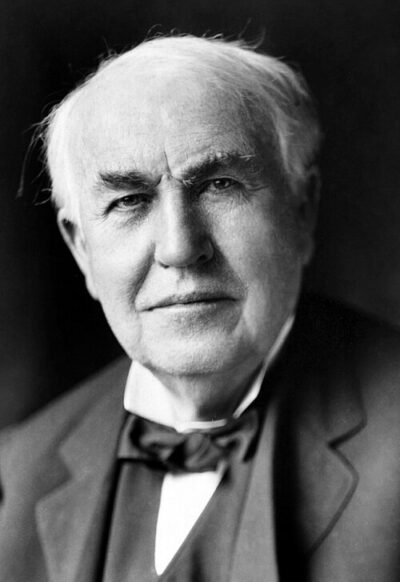
Picture: Wikimedia Commons: Edison and phonograph edit2.jpg · See Commons file page