Pinjar
Pinjar is a Punjabi novel about a abducted Hindu girl & Hindu-Muslim conflict. It came out in 1950. It was written by Amrita Pritam.
- Came out
- 1950
- Written by
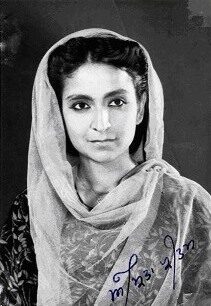
- Amrita Pritam
All 4 facts, and where they come from
Facts
4 facts · 0 confirmed by two sources · 0 cited · 4 from one source
Where this comes from
Papalocal keeps its own record. It started from these sources; what each one said is kept here as it was copied, so a change on their side never changes this page by itself. Tap one to read its version.
What Wikidata says · copied November 17, 2026 · revision 2548423997
- Described as
- Punjabi novel about a abducted Hindu girl & Hindu-Muslim conflict
- Other names
- Pinjar (novel)
- What it is
- literary work
- Written by
- Amrita Pritam
- Language
- Punjabi
- Came out
- 1950
- Wikipedias with a page
- 8
Wikidata item Q15595065 (wikidata.org/wiki/Q15595065), public domain (CC0). Copied 2026-11-17.
What Wikipedia says · copied November 17, 2026 · revision 1384699462
Pinjar (Punjabi: ਪਿੰਜਰ; English/Translation: The Skeleton) is a 1950 Punjabi-language novel written by notable Indian poet and novelist Amrita Pritam. In 2009, Pinjar was translated into English by Khushwant Singh. The novel depicts the conditions and nature of the Indian society during the partition of India in 1947. Amrita Pritam has poured her own experiences in the novel. It is the story of a Hindu woman, Puro, abducted by a Muslim man, Rashid; Puro's parents refuse to accept the "defiled" woman when she manages to escape from Rashid. Pinjar is widely considered one of the outstanding works of Indian fiction set during the Partition of India.
From the Wikipedia article “Pinjar (novel)” (en.wikipedia.org/wiki/Pinjar_(novel)), by its contributors, under CC BY-SA 4.0 (creativecommons.org/licenses/by-sa/4.0/). Copied 2026-11-17; not changed.
Confirmed Two sources agree. Cited One source, and it names where it got it. One source One source, without a reference of its own. Sources disagree The sources disagree. We show the best-supported value and keep theirs below.