Poincaré–Hopf theorem
Poincaré–Hopf theorem is a theorem relating the Euler characteristic of a closed manifold to the number of zeros of a vector field on it.
All 3 facts, and where they come from
Facts
3 facts · 0 confirmed by two sources · 0 cited · 3 from one source
Where this comes from
Papalocal keeps its own record. It started from these sources; what each one said is kept here as it was copied, so a change on their side never changes this page by itself. Tap one to read its version.
What Wikidata says · copied November 17, 2026 · revision 2549090091
- Described as
- theorem relating the Euler characteristic of a closed manifold to the number of zeros of a vector field on it
- Other names
- Poincaré–Hopf index formula, Poincaré–Hopf index theorem, Hopf index theorem
- What it is
- theorem
- Named after
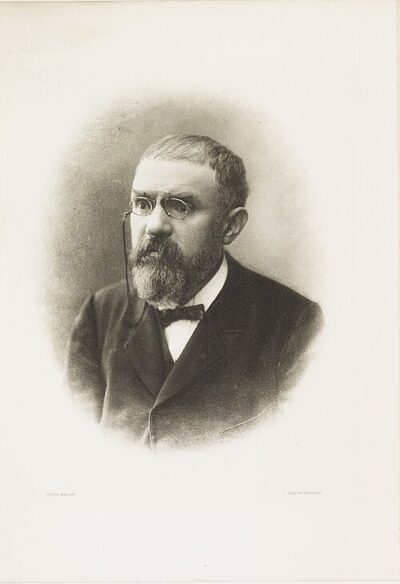
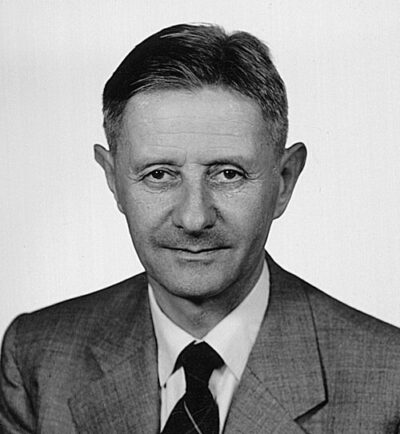
- Henri Poincaré; Heinz Hopf
- Wikipedias with a page
- 12
Wikidata item Q1305766 (wikidata.org/wiki/Q1305766), public domain (CC0). Copied 2026-11-17.
What Wikipedia says · copied November 17, 2026 · revision 1383485358
In mathematics, the Poincaré–Hopf theorem (also known as the Poincaré–Hopf index formula, Poincaré–Hopf index theorem, or Hopf index theorem) is an important theorem in differential topology that relates zeros of continuous vector field on compact differentiable manifold to Euler characteristic of that manifold. It is named after Henri Poincaré who proved it for 2-dimensional case and Heinz Hopf who proved it in general.
Some authors include also additional assumptions like orientability of manifold or smoothness of vector field, but these assumptions are not required in general, and are usually taken to simplify proof or demonstration of theorem in specific context.
The Poincaré–Hopf theorem is often
illustrated by the special case of the hairy ball theorem, which simply states that there is no continuous vector field on an even-dimensional n-sphere having no zeros.
From the Wikipedia article “Poincaré–Hopf theorem” (en.wikipedia.org/wiki/Poincaré–Hopf_theorem), by its contributors, under CC BY-SA 4.0 (creativecommons.org/licenses/by-sa/4.0/). Copied 2026-11-17; not changed.
Confirmed Two sources agree. Cited One source, and it names where it got it. One source One source, without a reference of its own. Sources disagree The sources disagree. We show the best-supported value and keep theirs below.