Poincaré recurrence theorem
Poincaré recurrence theorem is a theorem.
All 2 facts, and where they come from
Facts
2 facts · 0 confirmed by two sources · 0 cited · 2 from one source
Where this comes from
Papalocal keeps its own record. It started from these sources; what each one said is kept here as it was copied, so a change on their side never changes this page by itself. Tap one to read its version.
What Wikidata says · copied November 17, 2026 · revision 2550158585
- Described as
- theorem
- Other names
- Poincaré's recurrence theorem, Poincare recurrence theorem, Poincare recurrence
- What it is
- theorem
- Named after
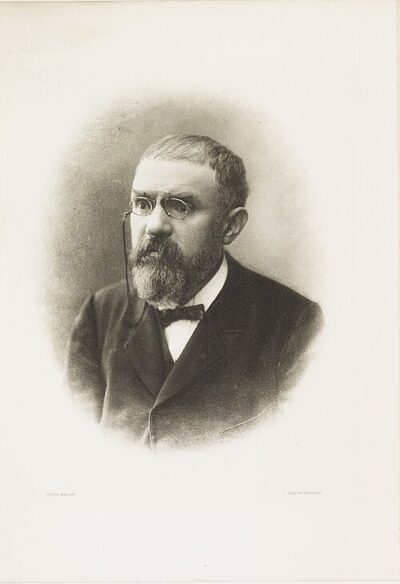
- Henri Poincaré
- Wikipedias with a page
- 19
Wikidata item Q226014 (wikidata.org/wiki/Q226014), public domain (CC0). Copied 2026-11-17.
What Wikipedia says · copied November 17, 2026 · revision 1380840769
In mathematics and physics, the Poincaré Recurrence Theorem states that if a system has a finite volume (or total probability measure) and preserves that volume over time, then almost every initial state will eventually return arbitrarily close to its starting position, and it will do so infinitely many times.
In simple terms, it is a foundational result in both dynamical systems and statistical mechanics. The theorem is named after Henri Poincaré, who discussed it in 1890. A proof was presented by Constantin Carathéodory using measure theory in 1919.
From the Wikipedia article “Poincaré recurrence theorem” (en.wikipedia.org/wiki/Poincaré_recurrence_theorem), by its contributors, under CC BY-SA 4.0 (creativecommons.org/licenses/by-sa/4.0/). Copied 2026-11-17; not changed.
Confirmed Two sources agree. Cited One source, and it names where it got it. One source One source, without a reference of its own. Sources disagree The sources disagree. We show the best-supported value and keep theirs below.