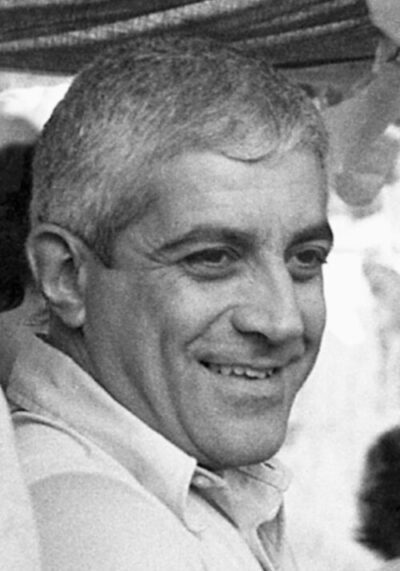
Popular Forces 25 April
Popular Forces 25 April is a Portuguese terrorist organization (1980-1991). It was founded by Otelo Saraiva de Carvalho.
- Founded
- April 20, 1980
- Founded by
- Otelo Saraiva de Carvalho
- Country
- Portugal
All 6 facts, and where they come from
Facts
6 facts · 0 confirmed by two sources · 4 cited · 2 from one source
Where this comes from
Papalocal keeps its own record. It started from these sources; what each one said is kept here as it was copied, so a change on their side never changes this page by itself. Tap one to read its version.
What Wikidata says · copied November 18, 2026 · revision 2497501361
- Described as
- Portuguese terrorist organization (1980-1991)
- Other names
- FP-25, Forças Populares 25 de abril, FP 25 de abril
- What it is
- terrorist organization · 1 reference
- Founded
- April 20, 1980 · 1 reference
- Ended
- May 10, 1991 · 1 reference
- Founded by
- Otelo Saraiva de Carvalho · 1 reference
- Country
- Portugal
- Named after
- Freedom Day
- Wikipedias with a page
- 7
Wikidata item Q2031598 (wikidata.org/wiki/Q2031598), public domain (CC0). Copied 2026-11-18.
What Wikipedia says · copied November 18, 2026 · revision 1380563836
The Forças Populares 25 de Abril (English: Popular Forces 25 April; FP 25 de Abril or FP-25) was a far-left militant political organization operating in Portugal between 1980 and 1987, having been allegedly led by Otelo Saraiva de Carvalho. At the end of the judicial process known as "FUP/FP-25", Otelo and other accused members were amnestied of moral authorship and were found innocent of material authorship.
Between 1980 and 1987, the organisation FP-25 was directly responsible for 12 to 14 deaths. Half were planned targets, mostly businessmen or managers involved in labour conflicts or retaliation of the organisation against who harmed members of the organisation. The other half were non-intended targets, mostly members of the police forces, and a few civilians, including that of a child. There are also 6 deaths of its members. These followed dozens of shootings, attacks with explosives, and bank robberies.
The Orion operation (1984) led to the temporary arrest of more than 70 people, in what became known as the FUP/FP-25 process. The most famous members included Otelo Saraiva de Carvalho, José Mouta Liz and Pedro Goulart, among others. These three in specific stressed to belong exclusively to the political party Força de Unidade Popular (FUP). The defendants were later accused and charged in court for being a part of a terrorist organization, but the initial sentence would be partially annulled for unconstitutionality twice in 1989 and 1996.
After 12 years, in 1996, the left-centre parliamentary majority, made up by the Socialist Party and the Portuguese Communist Party, approved an amnesty for everyone involved in the eventual crime of terrorist association (moral authorship), due to the "juridic complexity (...) that doesn't herald the possibility of a solution of justice in reasonable time." The amnesty also ends up involving right-wing and left-wing organizations, approved in 1996 with the support of the President Mário Soares. It follows the previous experience of amnesty in 1979 or the pardon signed by the PM Aníbal Cavaco Silva for the fugitive Ramiro Moreira in 1991, right-wing member of the MDLP (Democratic Movement of Liberation of Portugal), sentenced to 20 years in prison for blood crimes or the non-accusation of António de Spínola, self-assumed leader of MDLP.
For the blood crimes (material authorship), after two not guilty sentences in 2001 and 2003, the Public Ministry did not appeal leading to the prescription of the sentences. The Emeritus Supreme Court President Noronha do Nascimento stated "Otelo was acquitted because nothing was proven against him".
From the Wikipedia article “Forças Populares 25 de Abril” (en.wikipedia.org/wiki/Forças_Populares_25_de_Abril), by its contributors, under CC BY-SA 4.0 (creativecommons.org/licenses/by-sa/4.0/). Copied 2026-11-18; not changed.
Confirmed Two sources agree. Cited One source, and it names where it got it. One source One source, without a reference of its own. Sources disagree The sources disagree. We show the best-supported value and keep theirs below.