
President of Myanmar
President of Myanmar is a head of state and head of government of Burma. It was created in 1948.
All 4 facts, and where they come from
Facts
4 facts · 0 confirmed by two sources · 0 cited · 4 from one source
Where this comes from
Papalocal keeps its own record. It started from these sources; what each one said is kept here as it was copied, so a change on their side never changes this page by itself. Tap one to read its version.
What Wikidata says · copied November 16, 2026 · revision 2568506511
- Described as
- head of state and head of government of Burma
- Other names
- President of the Republic of the Union of Myanmar, President of Burma, Myanmar President, Burma President
- What it is
- public office
- Created
- January 4, 1948
- Country
- Myanmar
- Office of
- Myanmar
- Wikipedias with a page
- 29
Wikidata item Q887124 (wikidata.org/wiki/Q887124), public domain (CC0). Copied 2026-11-16.
What Wikipedia says · copied November 16, 2026 · revision 1373759684
The president of the Republic of the Union of Myanmar (Burmese: နိုင်ငံတော်သမ္မတ, MLCTS: nuing ngam tau samma.ta., lit. 'President of the State') is the head of state and head of government of Myanmar. The president chairs the National Defence and Security Council and leads the Union Government (Cabinet), the executive branch of the Myanmar government.
The presidency was established in 1948, when Burma gained its independence from the British Empire. During this period, the president was the ceremonial head of state while prime minister is the actual head of government. The presidency was abolished following the 1962 coup d'etat, when Ne Win assumed the powers of both head of state and head of government as the Chairman of the Revolutionary Council and the Revolutionary Government. The 1974 Constitution reintroduced the presidency, to be held by the Chairman of the Council of State. The 1988 coup d'etat again led to the presidency's abolishment, with the Chairman of the State Law and Order Restoration Council (reconstituted in 1997 as the State Peace and Development Council) assuming the functions of the head of state.
The 2008 Constitution introduced a presidential system, where the president is both the head of state and government. Thein Sein assumed the presidency in 2011. After the 2015 election, the extraconstitutional post of State Counsellor of Myanmar was created for Aung San Suu Kyi, the leader of the majority party, the National League for Democracy, because she was ineligible for the presidency. She served as the de facto head of government until she was deposed in the 2021 coup d'état by Commander-in-Chief of Defence Services Min Aung Hlaing, who created the extraconstitutional posts of chairman of the State Administration Council and prime minister for himself to lead the government.
The president is elected by members of parliament, not by the general population; specifically the Presidential Electoral College, a three-committee body composed of members of parliament, elects the president. Each of the three committees, made up of Amyotha Hluttaw, Pyithu Hluttaw members of parliament, or military-appointed lawmakers, nominates a candidate for presidency. The presidency is the most powerful position in the civilian leadership structure. Even when an elected civilian government is in place, the president has no command authority over the Tatmadaw, and his executive authority is counterbalanced by the significant governance powers of Commander-in-Chief of Defence Services. The current president is Min Aung Hlaing, who assumed office 10 April 2026, having previously exercised the duties of the role from 2024 to 2026.
From the Wikipedia article “President of Myanmar” (en.wikipedia.org/wiki/President_of_Myanmar), by its contributors, under CC BY-SA 4.0 (creativecommons.org/licenses/by-sa/4.0/). Copied 2026-11-16; not changed.
Confirmed Two sources agree. Cited One source, and it names where it got it. One source One source, without a reference of its own. Sources disagree The sources disagree. We show the best-supported value and keep theirs below.
People connected 7
Held this office
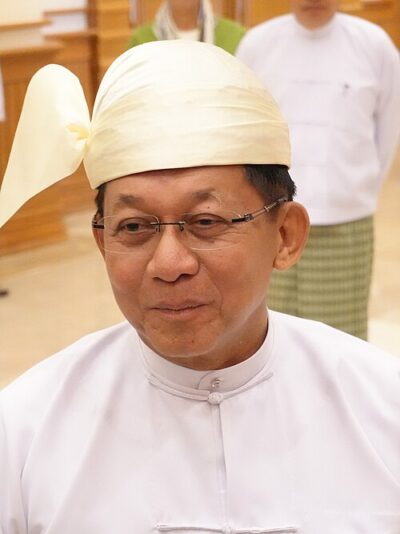 Min Aung Hlaing (2024–)11th President of Myanmar
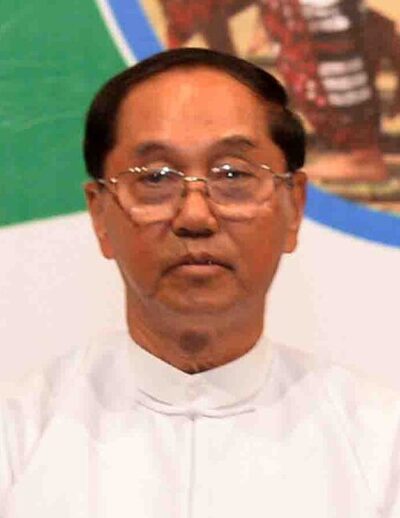 Myint Swe (2018–2024)Army officer and former Acting President of Myanmar (1951–2025)
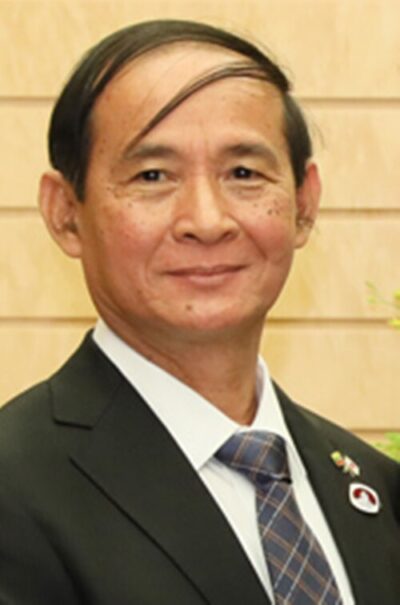 Win Myint (2018–)10th President of Myanmar
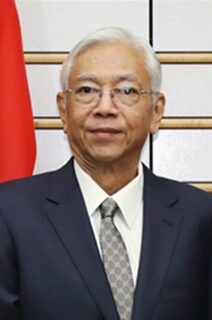 Htin Kyaw (2016–2018)Burmese politician and scholar serving as the 9th President of Myanmar
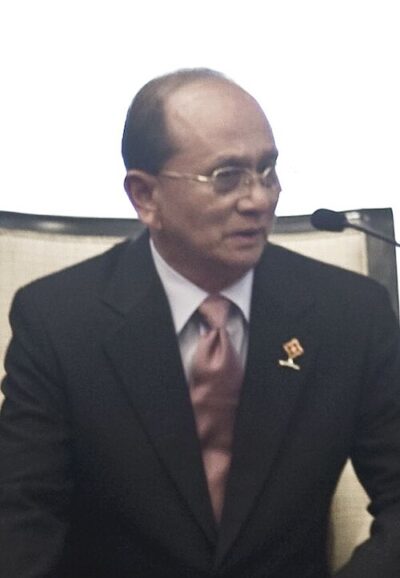 Thein Sein (2011–2016)former President and Prime Minister of Myanmar
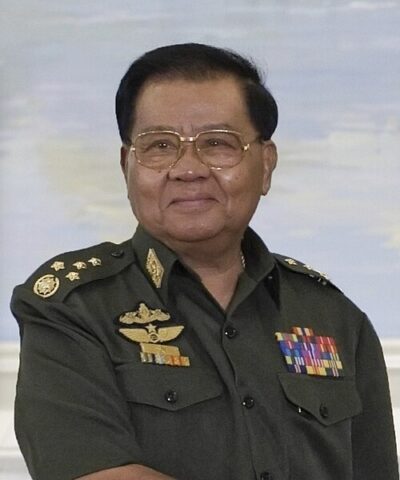 Than Shwe (1992–2011)Burmese senior general and head of state of Myanmar of Myanmar from 1992 to 2011
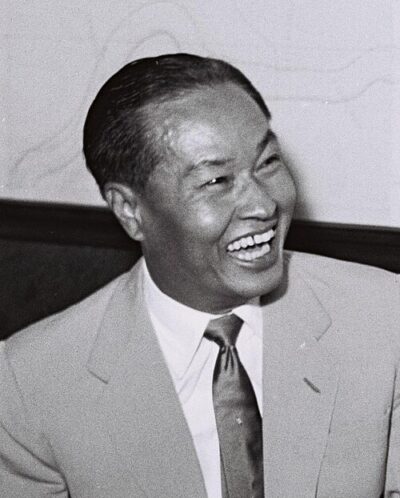 Ne Win (1974–1981)Military leader and head of state of Burma from 1962 to 1988
