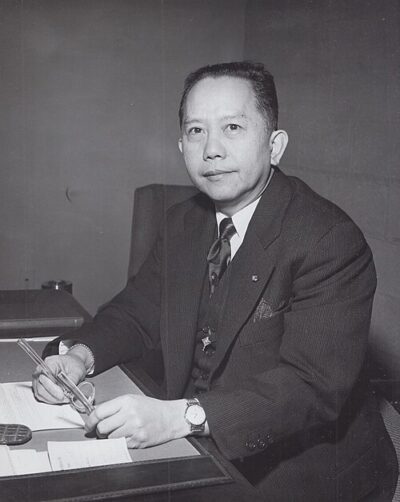
President of the University of the Philippines
The President of the University of the Philippines is a chief administrator and principal executive officer of the University of the Philippines.
- Country
- Philippines
All 3 facts, and where they come from
Facts
3 facts · 0 confirmed by two sources · 0 cited · 3 from one source
Where this comes from
Papalocal keeps its own record. It started from these sources; what each one said is kept here as it was copied, so a change on their side never changes this page by itself. Tap one to read its version.
What Wikidata says · copied November 18, 2026 · revision 2095746538
- Described as
- chief administrator and principal executive officer of the University of the Philippines
- Other names
- U.P. President, University of the Philippines President
- What it is
- university president
- Country
- Philippines
- Official website
- https://up.edu.ph/administration/office-of-the-university-president/
- Wikipedias with a page
- 3
Wikidata item Q7241386 (wikidata.org/wiki/Q7241386), public domain (CC0). Copied 2026-11-18.
What Wikipedia says · copied November 18, 2026 · revision 1373762008
The president of the University of the Philippines (Filipino: Pangulo ng Unibersidad ng Pilipinas) is the chief administrator and principal executive officer of the University of the Philippines. The president is elected for a single six-year term by the University's eleven-member Board of Regents (BOR). (Before the passage of RA 9500, there were 12 members in the BOR). As of 2023, two Americans and 20 Filipinos have served as President of the University of the Philippines.
Lawyer and former Regent Angelo Jimenez is the current President, having assumed office on February 10, 2023.
From the Wikipedia article “President of the University of the Philippines” (en.wikipedia.org/wiki/President_of_the_University_of_the_Philippines), by its contributors, under CC BY-SA 4.0 (creativecommons.org/licenses/by-sa/4.0/). Copied 2026-11-18; not changed.
Confirmed Two sources agree. Cited One source, and it names where it got it. One source One source, without a reference of its own. Sources disagree The sources disagree. We show the best-supported value and keep theirs below.