
President of Tunisia
President of Tunisia is a Head of State of the Republic of Tunisia. It was created in 1957.
All 5 facts, and where they come from
Facts
5 facts · 0 confirmed by two sources · 0 cited · 5 from one source
Where this comes from
Papalocal keeps its own record. It started from these sources; what each one said is kept here as it was copied, so a change on their side never changes this page by itself. Tap one to read its version.
What Wikidata says · copied November 17, 2026 · revision 2566082267
- Described as
- Head of State of the Republic of Tunisia.
- What it is
- position
- Created
- July 25, 1957
- Country
- Tunisia
- Office of
- Tunisia
- Official website
- http://www.carthage.tn/
- Wikipedias with a page
- 19
Wikidata item Q14911897 (wikidata.org/wiki/Q14911897), public domain (CC0). Copied 2026-11-17.
What Wikipedia says · copied November 17, 2026 · revision 1373760145
The president of Tunisia, officially the president of the Republic of Tunisia (Arabic: رئيس الجمهورية التونسية, romanized: Ra'īs al-Jumhūriyyah at-Tūnisiyyah), is the executive head of state of Tunisia. The president exercises executive power with the assistance of a government headed by the prime minister in a presidential system and is the commander-in-chief of the Tunisian Armed Forces. Under the Constitution, the president is elected by direct universal suffrage for a term of five years, renewable once.
The first president of the Tunisian Republic when the position was created on 25 July 1957 was Habib Bourguiba, who remained in power for 30 years until he was removed through the coup of 7 November 1987, by his prime minister Zine El Abidine Ben Ali, who appointed himself President of the Republic, and in turn remained in power for 23 years, until his fall in the Tunisian revolution on 14 January 2011. He then appointed Fouad Mebazaa as interim president, until he handed over power on 13 December 2011 to the politician Moncef Marzouki, the first democratic president in the country's history, who was elected by the Constituent Assembly.
Marzouki handed over power on 31 December 2014 to his successor, Beji Caid Essebsi, who won the 2014 presidential elections, thus becoming the second directly democratically elected president in the history of Tunisia, until his death on 25 July 2019, with Parliament Speaker Mohamed Ennaceur assuming the presidency temporarily until presidential elections were held. Bourguiba and Ben Ali also headed the ruling party, called the Neo Destour, Socialist Destourian Party then the Democratic Constitutional Rally, from independence in 1956 until the Tunisian revolution in 2011, when the president of the republic must abandon his party status if he wins the presidency. The 2022 Tunisian constitutional referendum transformed Tunisia into a presidential republic, giving the president sweeping powers while largely limiting the role of the parliament. The current president of the Republic of Tunisia is Kais Saied, since 23 October 2019.
From the Wikipedia article “President of Tunisia” (en.wikipedia.org/wiki/President_of_Tunisia), by its contributors, under CC BY-SA 4.0 (creativecommons.org/licenses/by-sa/4.0/). Copied 2026-11-17; not changed.
Confirmed Two sources agree. Cited One source, and it names where it got it. One source One source, without a reference of its own. Sources disagree The sources disagree. We show the best-supported value and keep theirs below.
People connected 8
Held this office
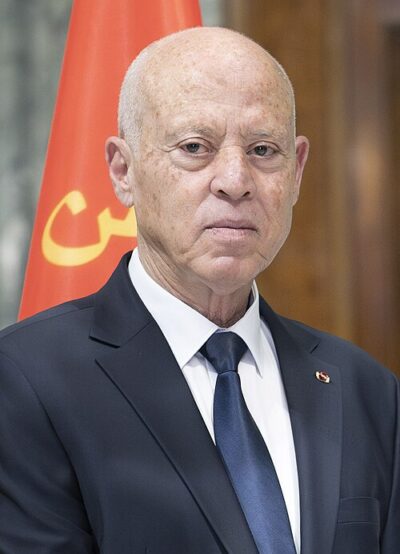 Kais Saied (2019–)Tunisian politician, academic and jurist
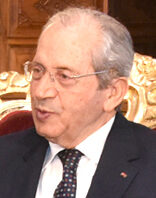 Mohamed Ennaceur (2019)Tunisian politician
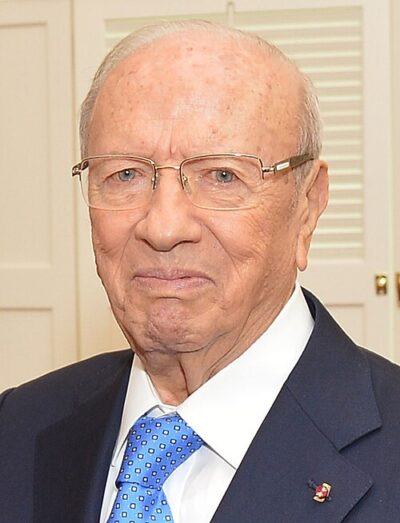 Beji Caid Essebsi (2014–2019)Tunisian politician
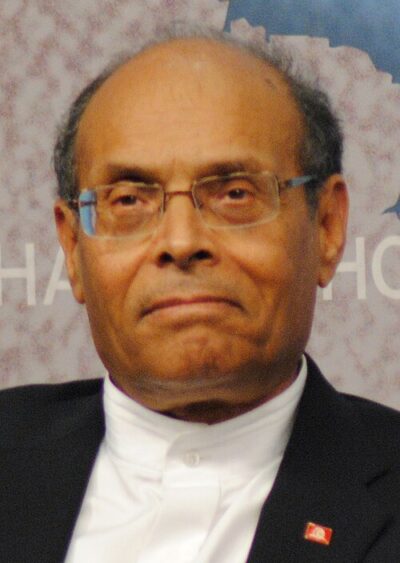 Moncef Marzouki (2011–2014)Tunisian politician
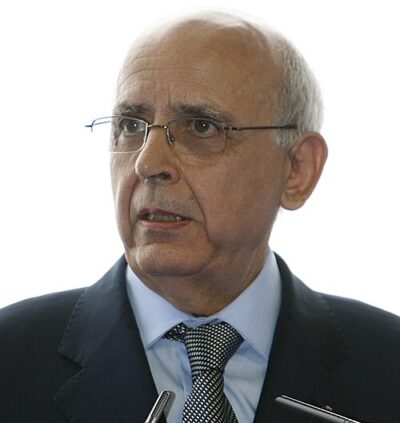 Mohamed Ghannouchi (2011)Tunisian politician
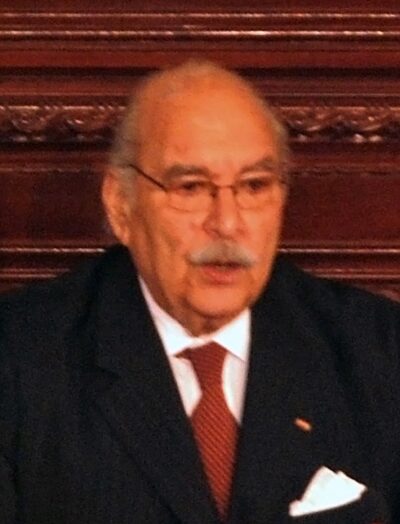 Fouad Mebazaa (2011)Tunisian politician
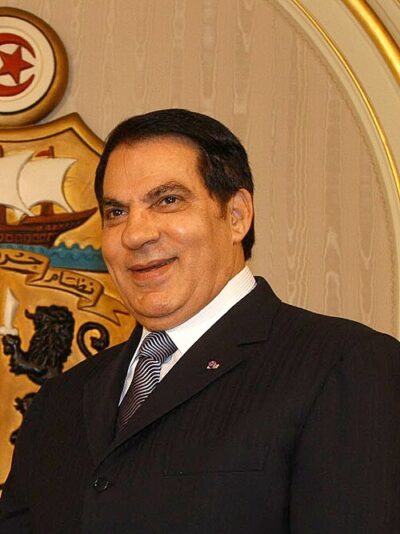 Zine El Abidine Ben Ali (1987–2011)Tunisian politician
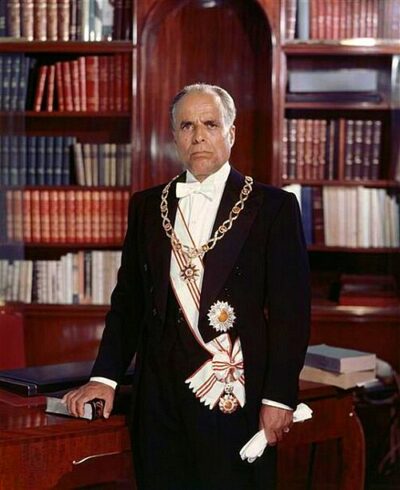 Habib Bourguiba (1957–1987)Tunisian politician (1903–2000)
