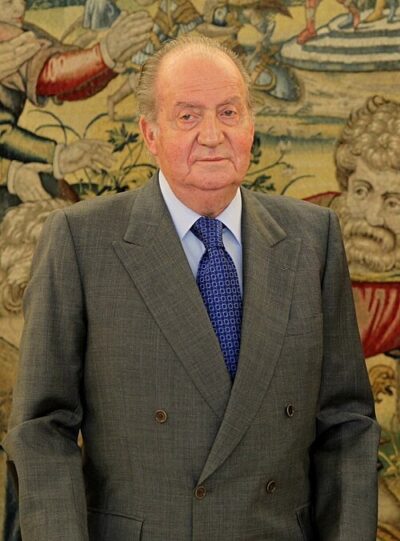
Prince of Spain
The Prince of Spain is a title bestowed on Juan Carlos de Borbón. It was created in 1969.
- Office of
- Spain
- Country
- Francoist Spain
- Created
- 1969
All 6 facts, and where they come from
Facts
6 facts · 0 confirmed by two sources · 0 cited · 6 from one source
Where this comes from
Papalocal keeps its own record. It started from these sources; what each one said is kept here as it was copied, so a change on their side never changes this page by itself. Tap one to read its version.
What Wikidata says · copied November 17, 2026 · revision 2535653185
- Described as
- title bestowed on Juan Carlos de Borbón
- What it is
- nobility of Spain; position
- Created
- 1969
- Ended
- November 22, 1975
- Country
- Francoist Spain
- Office of
- Spain
- Wikipedias with a page
- 10
Wikidata item Q7244359 (wikidata.org/wiki/Q7244359), public domain (CC0). Copied 2026-11-17.
What Wikipedia says · copied November 17, 2026 · revision 1373764306
Prince of Spain (Spanish: Príncipe de España) was the title created by law on 22 July 1969 for Prince Juan Carlos de Borbón, the designated successor of Generalísimo Francisco Franco. Juan Carlos held the title until 22 November 1975, when he became King of Spain following the death of Franco. The title given to the heir-apparent or heir-presumptive to the Spanish throne has since been Prince or Princess of Asturias.
The title was given the associated style of His Royal Highness and the military honours of the Brigadier General of the Army. The design of the coat of arms and the royal standard was regulated by decree on 22 April 1971 for the personal use of the Prince of Spain, not to be confused with an earlier hereditary confirmation by Joseph Bonaparte on his children and grandchildren.
From the Wikipedia article “Prince of Spain” (en.wikipedia.org/wiki/Prince_of_Spain), by its contributors, under CC BY-SA 4.0 (creativecommons.org/licenses/by-sa/4.0/). Copied 2026-11-17; not changed.
Confirmed Two sources agree. Cited One source, and it names where it got it. One source One source, without a reference of its own. Sources disagree The sources disagree. We show the best-supported value and keep theirs below.