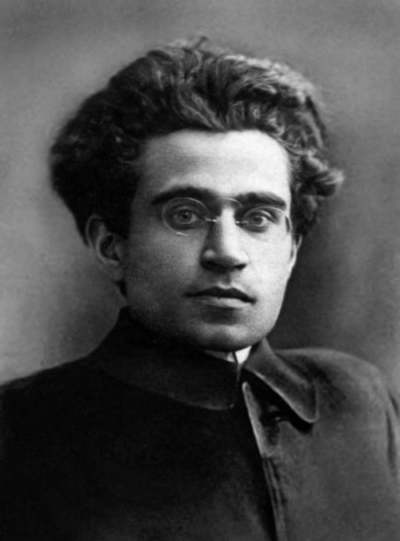
Prison Notebooks
Prison Notebooks is a book series. It came out in 1948. It was written by Antonio Gramsci.
- Released
- 1948
- Written by
- Antonio Gramsci
- Genre
- essay
- Country of origin
- Italy
All 6 facts, and where they come from
Facts
6 facts · 0 confirmed by two sources · 0 cited · 6 from one source
Where this comes from
Papalocal keeps its own record. It started from these sources; what each one said is kept here as it was copied, so a change on their side never changes this page by itself. Tap one to read its version.
What Wikidata says · copied November 17, 2026 · revision 2569442886
- Described as
- book series
- What it is
- book series
- Written by
- Antonio Gramsci
- Genre
- essay · 1 reference
- Released
- 1948
- Language
- Italian · 1 reference
- Country of origin
- Italy
- Wikipedias with a page
- 20
Wikidata item Q1113267 (wikidata.org/wiki/Q1113267), public domain (CC0). Copied 2026-11-17.
What Wikipedia says · copied November 17, 2026 · revision 1384351868
The Prison Notebooks (Italian: Quaderni del carcere [kwaˈdɛrni del ˈkartʃere]) are a series of essays written by the Italian Marxist Antonio Gramsci. Gramsci was imprisoned by the Italian Fascist regime in 1926. The notebooks were written between 1929 and 1935, when Gramsci was released from prison to a medical center on grounds of ill-health. His friend, Piero Sraffa, had supplied the writing implements and notebooks. Gramsci died in April 1937.
Gramsci wrote more than 30 notebooks and 3,000 pages of history and analysis during his imprisonment. The original Prison Notebooks are kept at the Fondazione Gramsci in Rome. These notebooks were initially smuggled out of prison, catalogued by Gramsci's sister-in-law Tatiana Schucht, and sent to Moscow for safekeeping. They were returned to Italy after World War II and have since been preserved by the Gramsci Foundation.
Although written unsystematically, the Prison Notebooks are considered a highly original contribution to 20th century political theory. Gramsci drew insights from varying sources – not only other Marxists but also thinkers such as Niccolò Machiavelli, Vilfredo Pareto, Georges Sorel and Benedetto Croce. His notebooks cover a wide range of topics, including Italian history and nationalism, the French Revolution, Fascism, Taylorism and Fordism, civil society, folklore, religion and high and popular culture.
Smuggled out of the prison in the 1930s, the first edition was published in 1947 and won the Viareggio Prize a few months later. Gramsci's posthumous award of the Viareggio Prize was followed by a memorial from the Constituent Assembly of Italy on April 28, 1947. The first published translations in English of some of the notebooks were made by Louis Marks in 1957, with more extensive Selections from the Prison Notebooks translated by Quintin Hoare and Geoffrey Nowell-Smith printed in 1971.
Ideas in Marxist theory, critical theory and educational theory that are associated with Gramsci's name include:Cultural hegemony as a means of maintaining the capitalist state.
The need for popular workers' education to encourage development of intellectuals from the working class.
The distinction between political society (the police, the army, legal system, etc.) which dominates directly and coercively, and civil society (the family, the education system, trade unions, etc.) where leadership is constituted through ideology or by means of consent.
"Absolute historicism".
A critique of economic determinism that opposes fatalistic interpretations of Marxism.
A critique of philosophical materialism.
From the Wikipedia article “Prison Notebooks” (en.wikipedia.org/wiki/Prison_Notebooks), by its contributors, under CC BY-SA 4.0 (creativecommons.org/licenses/by-sa/4.0/). Copied 2026-11-17; not changed.
Confirmed Two sources agree. Cited One source, and it names where it got it. One source One source, without a reference of its own. Sources disagree The sources disagree. We show the best-supported value and keep theirs below.
Picture: Wikimedia Commons: Gramsci 1922.jpg · See Commons file page