Progressive Party
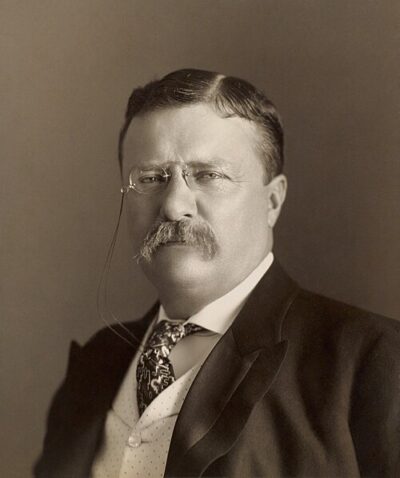
The Progressive Party is an American third party founded by Theodore Roosevelt. It was founded in 1912. Its headquarters are in Washington, D.C. It stands for progressivism in the United States.
- Country
- United States
- Founded
- 1912
- Ideology
- progressivism in the United States
- Chair
- Theodore Roosevelt
All 8 facts, and where they come from
Facts
8 facts · 0 confirmed by two sources · 0 cited · 8 from one source
Where this comes from
Papalocal keeps its own record. It started from these sources; what each one said is kept here as it was copied, so a change on their side never changes this page by itself. Tap one to read its version.
What Wikidata says · copied November 16, 2026 · revision 2499599756
- Described as
- American third party founded by Theodore Roosevelt
- Other names
- Progressive Party (United States, 1912), Bull Moose Party
- What it is
- political party
- Followed by
- Progressive Party
- Founded
- 1912
- Ended
- 1916
- Headquarters
- Washington, D.C. · 1 reference
- Country
- United States
- Chair
- Theodore Roosevelt
- Ideology
- progressivism in the United States
- Wikipedias with a page
- 23
Wikidata item Q1363538 (wikidata.org/wiki/Q1363538), public domain (CC0). Copied 2026-11-16.
What Wikipedia says · copied November 16, 2026 · revision 1384709645
The Progressive Party, also known as the Bull Moose Party, was a United States third party formed by supporters of former president Theodore Roosevelt to act as an independent vehicle for his campaign for the 1912 presidential election. After losing the presidential nomination of the Republican Party to incumbent William Howard Taft at the 1912 Republican National Convention, Roosevelt's supporters nominated him on the Bull Moose ticket in every state except Oklahoma. Its nickname comes from a statement Roosevelt made following his loss at the 1912 convention, boasting that he felt "strong as a bull moose." The party attracted progressives, reformers, and classical radicals. In addition to Roosevelt, it also fielded candidates for United States Congress and state and local office through the 1910s. After Roosevelt's defeat, however, the party went into rapid decline and dissolved shortly after his death in 1919.
Historians and critics generally regard the party as having been reliant on a cult of personality around Roosevelt and as having had a spoiler effect, splitting the Republican Party and resulting in landslide victories for the opposition Democratic Party. The party platform was built on Roosevelt's Square Deal domestic program and his call for a "New Nationalism," asserting that "the first task of the statesmanship of the day" was "to dissolve the unholy alliance between corrupt business and corrupt politics." The platform included proposals for campaign finance restrictions, tariff reform, social insurance, direct democracy, an eight-hour workday and women's suffrage. Although Roosevelt finished ahead of Taft in the 1912 election, both finished well behind Democratic nominee Woodrow Wilson, who won the presidency with a plurality of the popular vote. Though several Progressives were elected to Congress or state offices, the party never achieved a role in national government, and Roosevelt was blamed by many Republicans for Wilson's election. Efforts to merge the Republicans and Progressives were abandoned in 1916, after Roosevelt himself rejoined the Republican Party and urged his supporters to vote for Charles Evans Hughes. Roosevelt died in 1919, and by 1920, the party no longer existed as a national organization.
Despite its brief history and relatively disappointing electoral results, the party established a strong historical legacy in United States politics. Many former members went on to successful political careers within the American two-party system, particularly during the New Deal era and presidency of Franklin D. Roosevelt. Since its dissolution, many independent American third parties have also adopted the Progressive banner, if not its platform, including the national Progressive Party of 1924, National Progressives of America, and Progressive Party of 1948. Local parties sharing its name, including the Wisconsin Progressive Party and Vermont Progressive Party, have also had state and local electoral success.
From the Wikipedia article “Bull Moose Party” (en.wikipedia.org/wiki/Bull_Moose_Party), by its contributors, under CC BY-SA 4.0 (creativecommons.org/licenses/by-sa/4.0/). Copied 2026-11-16; not changed.
Confirmed Two sources agree. Cited One source, and it names where it got it. One source One source, without a reference of its own. Sources disagree The sources disagree. We show the best-supported value and keep theirs below.