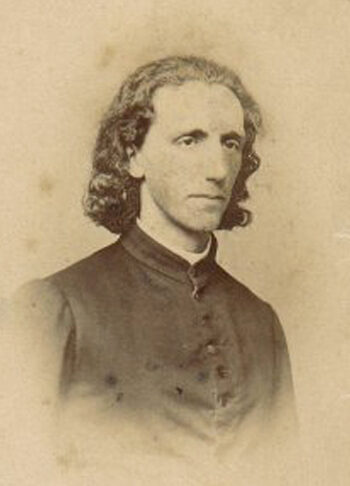
Psychology from an Empirical Standpoint
Psychology from an Empirical Standpoint is a central scientific work by Franz Brentano released 1874.
- Written by
- Franz Brentano
- Country of origin
- Germany
All 4 facts, and where they come from
Facts
4 facts · 0 confirmed by two sources · 0 cited · 4 from one source
Where this comes from
Papalocal keeps its own record. It started from these sources; what each one said is kept here as it was copied, so a change on their side never changes this page by itself. Tap one to read its version.
What Wikidata says · copied November 17, 2026 · revision 2413132347
- Described as
- central scientific work by Franz Brentano released 1874
- What it is
- literary work
- Written by
- Franz Brentano
- Language
- German
- Country of origin
- Germany · 1 reference
- Wikipedias with a page
- 4
Wikidata item Q7256401 (wikidata.org/wiki/Q7256401), public domain (CC0). Copied 2026-11-17.
What Wikipedia says · copied November 17, 2026 · revision 1384799929
Psychology from an Empirical Standpoint (German: Psychologie vom empirischen Standpunkte; 1874; second edition 1924) is an 1874 book by the Austrian philosopher Franz Brentano, in which the author argues that the goal of psychology should be to establish exact laws. Brentano's best known book, it established his reputation as a philosopher, helped to establish psychology as a scientific discipline, and influenced Husserlian phenomenology, analytic philosophy, gestalt psychology, and the philosopher Alexius Meinong's theory of objects. It has been called Brentano's best known work and has been compared to the physician Wilhelm Wundt's Grundzüge der physiologischen Psychologie and the Project for a Scientific Psychology of Sigmund Freud, the founder of psychoanalysis.
From the Wikipedia article “Psychology from an Empirical Standpoint” (en.wikipedia.org/wiki/Psychology_from_an_Empirical_Standpoint), by its contributors, under CC BY-SA 4.0 (creativecommons.org/licenses/by-sa/4.0/). Copied 2026-11-17; not changed.
Confirmed Two sources agree. Cited One source, and it names where it got it. One source One source, without a reference of its own. Sources disagree The sources disagree. We show the best-supported value and keep theirs below.